
50 Essential Fire Safety Tips for Your Kitchen
The kitchen is often the heart of the home, but it’s also one of the most common places where fires start. Cooking-related fires can happen in seconds and lead to devastating consequences if not handled properly.
Fire safety in the kitchen is a shared responsibility that requires awareness, preparation, and consistent safe practices.
As of 2026, fire services continue to emphasise "Stand by your Pan" and the importance of specific detection equipment for the kitchen environment.
It is essential to follow these tips, such as using equipment correctly, preventing grease fires, maintaining appliances, and responding calmly in emergencies, to significantly reduce the risk of accidents and injuries.
This guide provides 50 practical fire safety tips for your kitchen covering prevention, cooking practices, emergency response, and appliance safety. Whether you’re a seasoned cook or just starting out, these tips will help you create a safer kitchen environment and ensure peace of mind.
General Fire Prevention
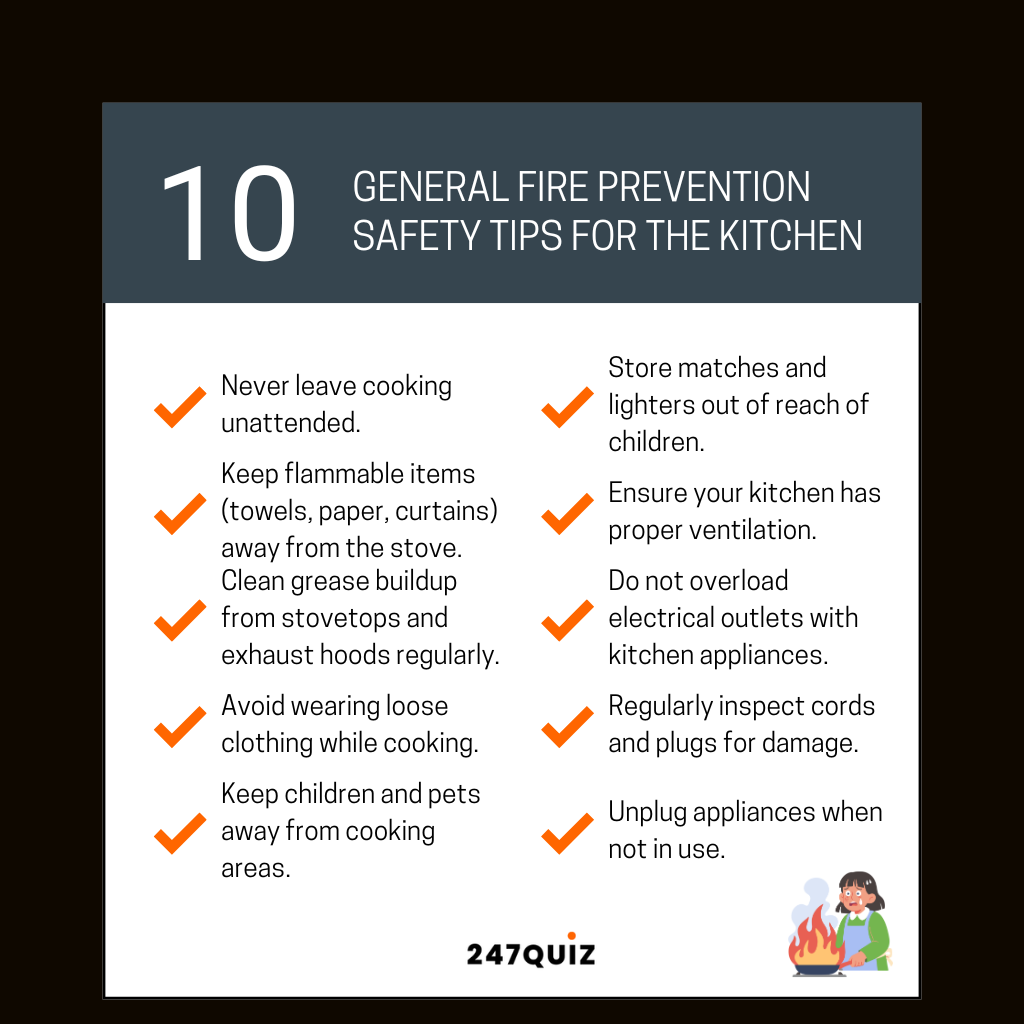
- Never leave cooking unattended.
- Keep flammable items (towels, paper, curtains) away from the stove.
- Clean grease buildup from stovetops and exhaust hoods regularly.
- Avoid wearing loose clothing while cooking.
- Keep children and pets away from cooking areas.
- Store matches and lighters out of reach of children.
- Ensure your kitchen has proper ventilation.
- Do not overload electrical outlets with kitchen appliances.
- Regularly inspect cords and plugs for damage.
- Unplug appliances when not in use.
Cooking Safety
- Turn pot handles inward to prevent accidental spills.
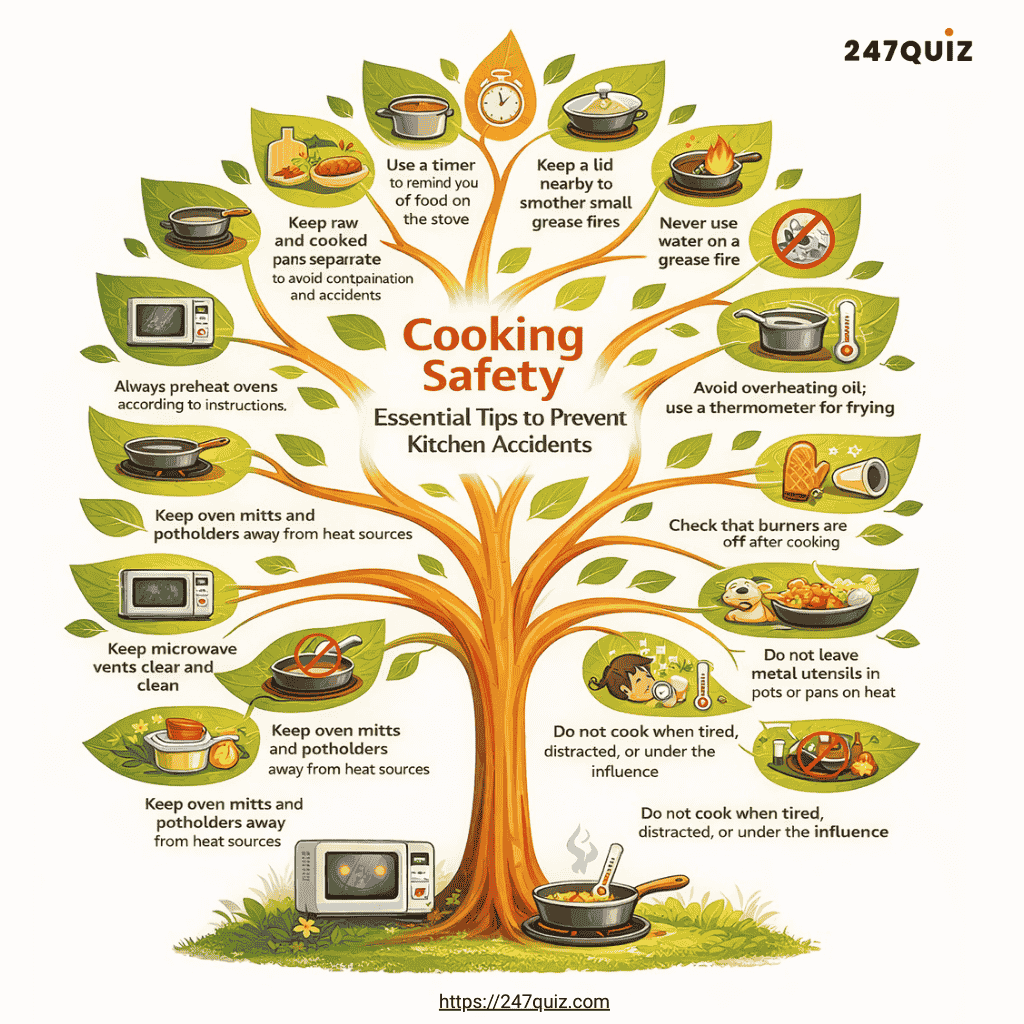
- Use a timer to remind you of food on the stove.
- Keep a lid nearby to smother small grease fires.
- Never use water on a grease fire.
- Avoid overheating oil; use a thermometer for frying.
- Do not cook when tired, distracted, or under the influence.
- Keep oven mitts and potholders away from heat sources.
- Check that burners are off after cooking.
- Do not leave metal utensils in pots or pans on heat.
- Keep microwave vents clear and clean.
- Always preheat ovens according to instructions.
- Do not overcrowd pans with food, which can cause oil splashes.
- Keep raw and cooked food separate to avoid contamination and accidents.
- Use the right size pan for the burner.
- Never heat sealed containers in the oven or microwave.
Fire Response
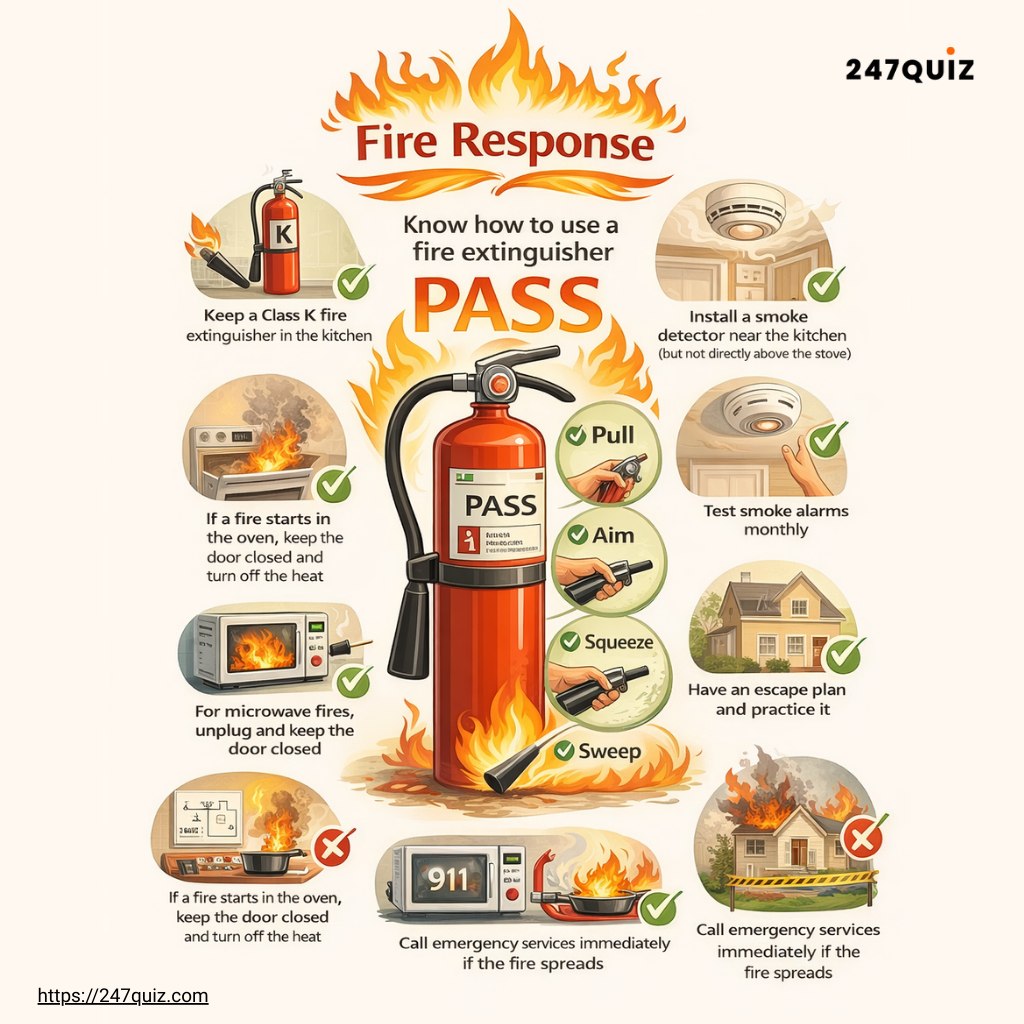
- Know how to use a fire extinguisher (PASS: Pull, Aim, Squeeze, Sweep).
- Keep a Class K fire extinguisher in the kitchen.
- Install a smoke detector near the kitchen (but not directly above the stove).
- Test smoke alarms monthly.
- Have an escape plan and practice it.
- If a fire starts in the oven, keep the door closed and turn off the heat.
- For microwave fires, unplug and keep the door closed.
- Never try to carry a burning pan outside.
- Call emergency services immediately if the fire spreads.
- Do not re-enter the house until cleared by authorities.
Appliance Safety
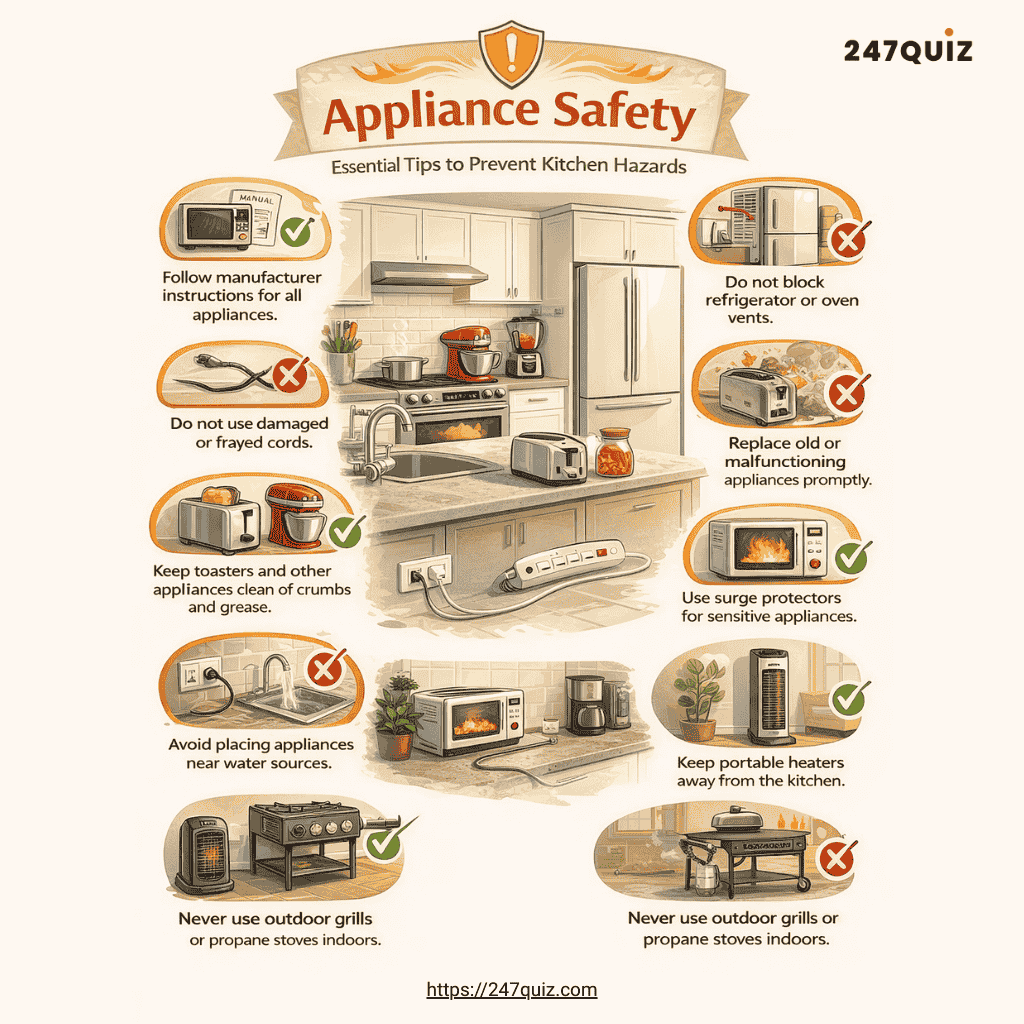
- Follow manufacturer instructions for all appliances.
- Do not use damaged or frayed cords.
- Keep toasters and other appliances clean of crumbs and grease.
- Avoid placing appliances near water sources.
- Turn off appliances before cleaning them.
- Do not block refrigerator or oven vents.
- Replace old or malfunctioning appliances promptly.
- Use surge protectors for sensitive appliances.
- Keep portable heaters away from the kitchen.
- Never use outdoor grills or propane stoves indoors.
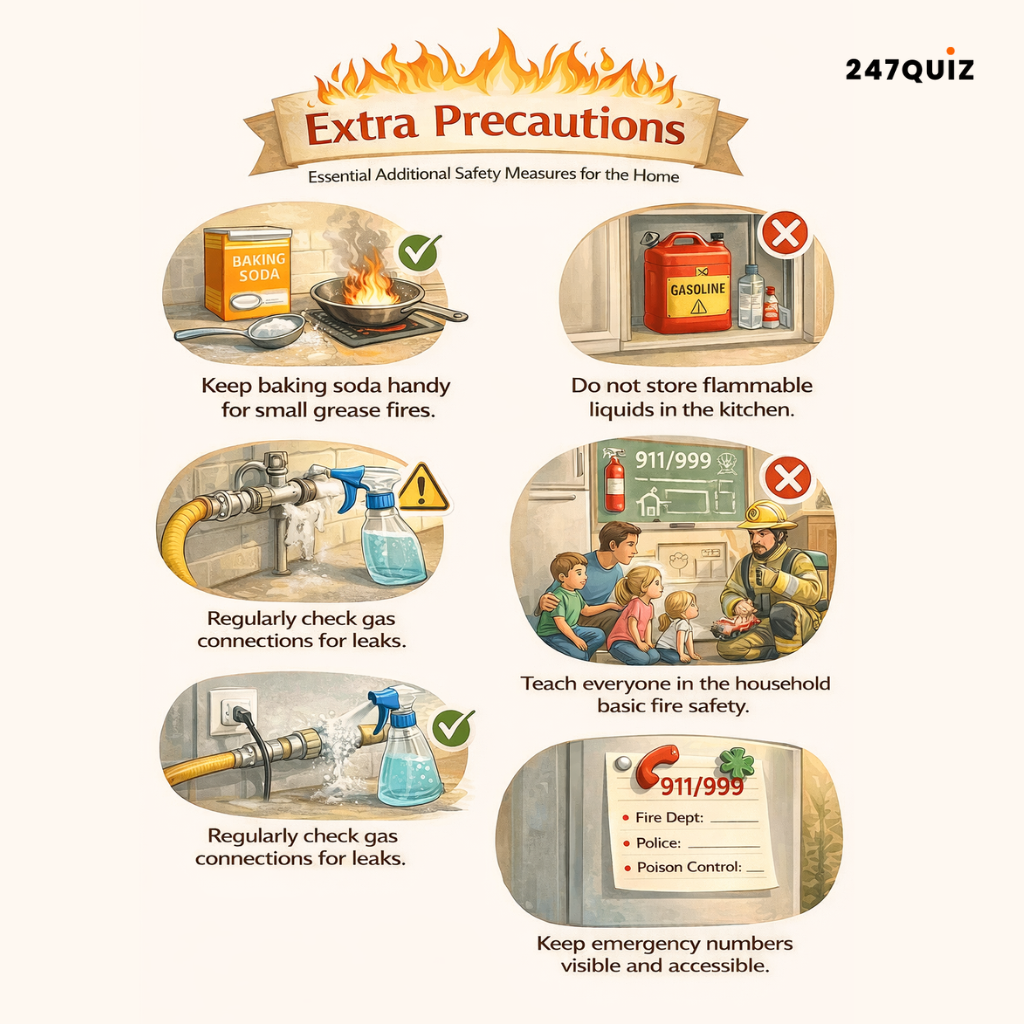
Extra Precautions
- Keep baking soda handy for small grease fires.
- Do not store flammable liquids in the kitchen.
- Regularly check gas connections for leaks.
- Teach everyone in the household basic fire safety.
- Keep emergency numbers visible and accessible.
Preventing fires requires constant awareness, safe habits, and preparedness. From everyday cooking practices and proper appliance use to knowing how to respond quickly in an emergency, each step plays a vital role in fire safety. Regular maintenance, clear escape plans, and accessible safety tools can make a critical difference when seconds matter. By following these guidelines and ensuring everyone in the household understands them, you help create a safer home and reduce the risk of devastating fire-related incidents.