
Examples of Safeguarding in Health and Social Care
Safeguarding in health and social care involves proactive measures and timely responses to protect individuals from harm, abuse, and neglect. It is a legal and ethical responsibility for all professionals working in these sectors.
Safeguarding ensures that vulnerable people—such as children, older adults, and individuals with disabilities—are cared for in a safe environment where their rights, dignity, and well-being are upheld.
This article explores key examples of safeguarding practices, common safeguarding concerns, and actions taken to address them, alongside the principles that underpin effective safeguarding.
What is Safeguarding in Health & Social Care?
Safeguarding in health and social care involves protecting vulnerable individuals from harm, abuse, and neglect through actions such as staff training, risk assessments, implementing policies, and inter-agency cooperation.
Examples include preventing medication mismanagement, recognizing signs of financial abuse, ensuring proper nutrition, and intervening in cases of bullying or online exploitation, all while respecting the person’s dignity and promoting their wellbeing.
Click to reveal what safeguarding means
Safeguarding in Health and Social Care means protecting people's health, wellbeing, and human rights, ensuring they live free from harm, abuse, and neglect, especially vulnerable children and adults at risk. It involves recognizing and responding to risks like bullying, exploitation, and self-harm, promoting dignity, respecting choices, and taking action to prevent abuse and improve safety.
Examples of Safeguarding Practices
Safeguarding is not limited to responding to abuse; it also includes preventive measures that create safe systems and environments. Below are essential practices:
1. Staff Training
Providing staff with ongoing, comprehensive education is crucial. Training helps professionals recognize signs of abuse and neglect—whether physical, sexual, emotional, or financial—and understand proper reporting procedures.
For example, a care worker trained in safeguarding can identify indicators of psychological abuse, such as withdrawal or fearfulness, and act promptly.
Regular refresher courses ensure staff remain updated on legislation and best practices.
2. Safe Recruitment Procedures
Recruitment processes must include rigorous background checks, such as Disclosure and Barring Service (DBS) checks in the UK, and thorough vetting of references. These steps ensure that staff and volunteers are suitable to work with vulnerable individuals.
For instance, a care home hiring a new nurse will verify their qualifications and check for any history of misconduct. Safe recruitment reduces the risk of harm from individuals who may exploit their position.
3. Risk Assessments
Risk assessments identify potential hazards and implement control measures to prevent harm.
Examples include removing tripping hazards for an older person at risk of falls or ensuring appropriate supervision ratios for children during outings.
In residential care, risk assessments might involve checking fire safety systems or monitoring medication storage. These proactive steps minimize risks and promote safety.
4. Person-Centred Care
Empowering individuals to make their own decisions about their care and lifestyle is a core safeguarding principle.
This approach respects autonomy and ensures actions are proportionate to the risks presented.
For example, an older adult may choose to live independently despite some fall risk; professionals should support this choice while implementing safety measures like grab rails and emergency alarms.
5. Clear Reporting Systems
Establishing clear operational procedures for reporting concerns is vital. Staff, individuals receiving care, and their families should know how to confidentially raise issues without fear of retaliation.
Whistleblowing policies protect employees who report unsafe practices. Transparent reporting systems encourage early intervention and accountability.
6. Information Sharing
Effective safeguarding often requires sharing relevant information between agencies—such as health services, social care, and the police—especially when there is a risk of serious harm.
While consent is generally sought, professionals may share information without consent if necessary to protect someone from significant danger.
This collaborative approach ensures timely and coordinated responses.
Examples of Safeguarding Concerns
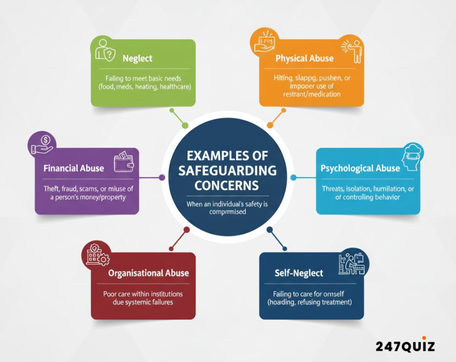
Safeguarding concerns arise when an individual’s safety or well-being is compromised.
Common examples include:
- Neglect: Failing to meet a person’s medical, physical, or emotional needs, such as not providing food, medication, heating, or access to healthcare.
- Physical Abuse: Acts like hitting, slapping, pushing, or inappropriate use of restraint or medication.
- Financial Abuse: Theft, fraud, scams, or misuse of a person’s property, possessions, or benefits.
- Psychological Abuse: Threats, isolation, humiliation, verbal abuse, or controlling behavior causing emotional distress.
- Organisational Abuse: Poor care practices within an institution due to systemic failures in policies or culture.
- Self-Neglect: When individuals fail to care for themselves, such as severe hoarding or refusing necessary medical treatment.
Safeguarding in Practice
Safeguarding focuses on protecting vulnerable individuals—children and adults—from harm through proactive action. This includes monitoring signs of neglect, reporting suspected abuse such as FGM or exploitation, enforcing strong policies on bullying and online safety, maintaining safe and well-supervised environments, and training staff to recognise risks like radicalisation or grooming. Effective safeguarding creates robust systems that respond promptly to concerns, uphold wellbeing, and protect human rights.
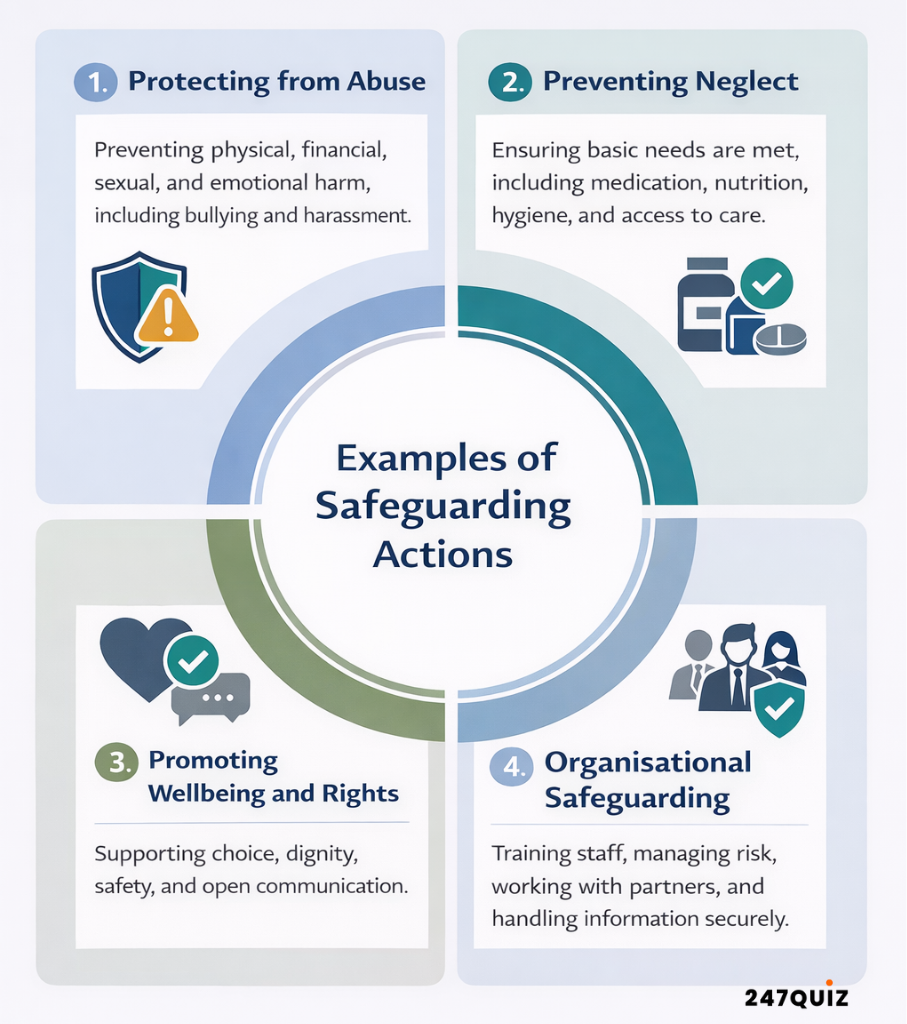
Examples of Safeguarding Actions
Safeguarding actions aim to prevent harm and respond effectively to concerns:
1. Protecting from Abuse
- Reporting unexplained injuries like bruises or burns.
- Identifying and stopping financial exploitation, such as theft or coercion.
- Recognizing and addressing sexual abuse or exploitation.
- Challenging bullying, discrimination, or harassment—both online and in person.
2. Preventing Neglect
- Ensuring timely administration of medication.
- Providing adequate nutrition and hydration.
- Maintaining personal hygiene and preventing pressure sores.
- Facilitating access to health, care, and support services.
3. Promoting Wellbeing and Rights
- Supporting individuals to make their own choices (dignity of risk).
- Creating environments free from institutional abuse, such as avoiding unnecessary confinement.
- Encouraging open communication and maintaining whistleblowing channels.
4. Organisational Safeguarding
- Conducting regular staff training on identifying and responding to abuse.
- Performing risk assessments for new activities or placements.
- Collaborating with police, GPs, and other agencies on complex cases.
- Using secure digital tools to manage safeguarding information safely.
Key Principles of Safeguarding (Six Principles)
1. Empowerment
People are supported and encouraged to make their own decisions and give informed consent.
🧩Example: Using accessible information and advocacy so someone can choose their care options.
2. Prevention
It is better to take action before harm occurs.
🧩Example: Regular training, risk assessments, and early support to reduce the likelihood of abuse or neglect.
3. Proportionality
The least intrusive response appropriate to the risk presented.
🧩Example: Balancing safety measures with the person’s rights and preferences (dignity of risk).
4. Protection
Support and representation for those in greatest need.
🧩Example: Taking immediate action when there is evidence of abuse, and ensuring the person is safe.
5. Partnership
Local solutions through services working with their communities; communities have a part to play in preventing, detecting, and reporting neglect and abuse.
🧩Example: Health, social care, police, and voluntary agencies sharing information and coordinating responses.
6. Accountability
Accountability and transparency in delivering safeguarding.
🧩Example: Clear roles, robust record-keeping, incident review, and open reporting/whistleblowing processes.
These principles, set by the Department of Health and included in UK laws such as the Care Act, help health and social care services create safer environments for everyone.
Test Your Knowledge on Safeguarding (15 Questions)
What are Safeguarding Issues?
Safeguarding issues refer to situations where the safety, health, or wellbeing of a child or vulnerable adult is at risk due to harm, abuse, or neglect.
These issues can manifest in various ways depending on the setting and the individuals involved.
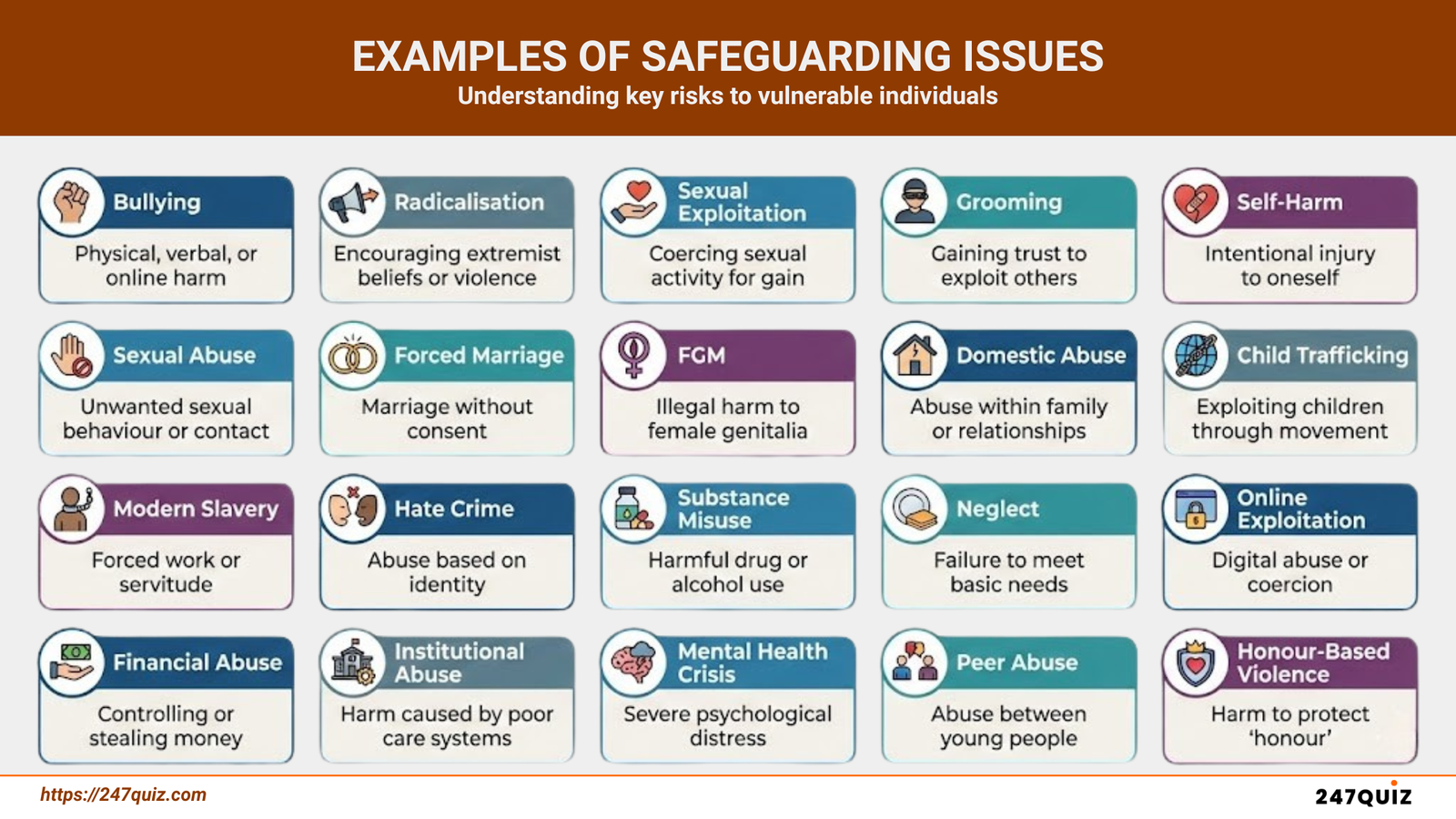
Examples of Safeguarding Issues
- Bullying – Physical, verbal, or cyberbullying that causes harm or distress.
- Radicalisation – Influencing individuals to adopt extremist ideologies or engage in terrorism.
- Sexual Exploitation – Manipulating or coercing someone into sexual activity for financial or personal gain.
- Grooming – Building trust with a child or vulnerable adult to exploit them sexually or criminally.
- Self-Harm – Deliberate injury to oneself, often linked to mental health struggles.
- Sexual Harassment and Assault – Unwanted sexual advances, comments, or physical contact.
- Forced Marriage – Coercing someone into marriage against their will.
- Female Genital Mutilation (FGM) – Illegal practice of altering or injuring female genitalia for non-medical reasons.
- Domestic Abuse – Physical, emotional, or financial abuse within intimate or family relationships.
- Child Trafficking – Exploiting children through illegal movement for labor, sexual exploitation, or criminal activity.
- Modern Slavery – Forcing individuals into work or servitude under threat or coercion.
- Discrimination and Hate Crime – Targeting individuals based on race, religion, gender, disability, or sexuality.
- Substance Misuse – Drug or alcohol abuse that puts individuals at risk of harm.
- Neglect – Failure to meet basic needs such as food, shelter, medical care, or emotional support.
- Online Exploitation – Using digital platforms to exploit or abuse individuals, including sextortion and cyber grooming.
- Financial Abuse – Theft, fraud, or coercion to gain control over someone’s money or assets.
- Institutional Abuse – Poor care practices within organizations due to systemic failures.
- Mental Health Crisis – Situations where individuals are at risk due to severe psychological distress.
- Peer-on-Peer Abuse – Abuse between individuals of similar age, often in schools or care settings.
- Honour-Based Violence – Harm inflicted to protect perceived family or community ‘honour’.
Legal Frameworks Supporting Safeguarding
Safeguarding practices are underpinned by legislation and statutory guidance, including:
- Care Act 2014 – Establishes duties for local authorities to protect adults at risk.
- Children Act 1989 and 2004 – Defines responsibilities for safeguarding children.
- Working Together to Safeguard Children – Provides inter-agency cooperation guidelines.
- Data Protection Act 2018 and GDPR – Ensures confidentiality and lawful information sharing.
In the UK, safeguarding is primarily governed by the Children Act 1989, the Children Act 2004, and the Care Act 2014.
These laws require inter-agency cooperation, DBS vetting, and place legal duties on organisations to protect children and vulnerable adults.
Conclusion
Safeguarding in health and social care is a proactive and collaborative process that protects individuals from harm while promoting dignity and autonomy.
Through practices such as staff training, safe recruitment, risk assessments, and clear reporting systems, professionals create safe environments for vulnerable people.
Addressing safeguarding concerns promptly—whether neglect, abuse, or organisational failings—requires vigilance, empathy, and adherence to legal frameworks.
Ultimately, safeguarding is about more than preventing harm; it is about empowering individuals, respecting their rights, and ensuring their well-being.