
Legal Frameworks Supporting Safeguarding in the UK
The United Kingdom has developed a layered system of legislation and statutory guidance to safeguard children and vulnerable adults.
These frameworks establish duties for agencies and professionals to prevent harm, promote well-being, and ensure multi-agency cooperation. They also provide mechanisms for accountability and intervention when risks arise.
1. Protection of Children
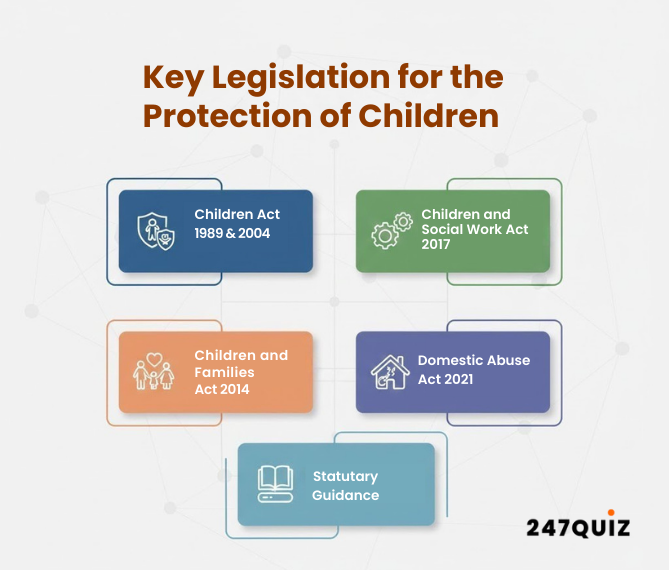
Children Act 1989 & 2004
The Children Act 1989 introduced the concept of “significant harm” and placed a duty on local authorities to safeguard and promote the welfare of children in need. Section 47 empowers authorities to investigate when harm is suspected.
The Children Act 2004 strengthened these provisions by emphasizing inter-agency collaboration and introducing the Every Child Matters outcomes: being healthy, staying safe, achieving, contributing, and economic well-being.
Children and Social Work Act 2017
This Act reinforced multi-agency safeguarding arrangements, requiring local authorities, police, and health bodies to work together under clear responsibilities.
Children and Families Act 2014
ntroduced new systems for supporting vulnerable children, including reforms for special educational needs and adoption processes.
Domestic Abuse Act 2021
Defines domestic abuse broadly—physical, emotional, coercive, and economic—and recognizes children as victims in their own right. It mandates support for victims, including refuge accommodation.
Statutory Guidance
Documents such as Working Together to Safeguard Children and Keeping Children Safe in Education provide mandatory instructions for professionals on implementing these laws.
2. Protection of Adults at Risk
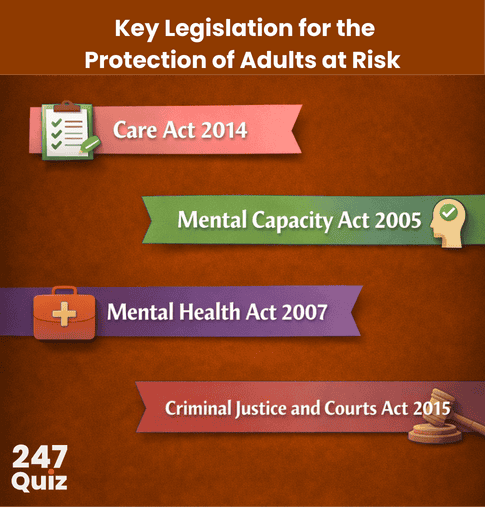
Care Act 2014
This Act establishes the legal framework for adult safeguarding. Local authorities must lead safeguarding enquiries, set up Safeguarding Adults Boards, and conduct reviews in serious cases. It promotes six principles: empowerment, prevention, proportionality, protection, partnership, and accountability.
Mental Capacity Act 2005
Protects individuals aged 16+ who lack capacity to make decisions. It is based on five principles: presumption of capacity, right to support, right to make unwise decisions, acting in best interests, and least restrictive options.
Mental Health Act 2007
Allows compulsory admission and treatment for mental health conditions when informal care fails, acting as a safeguarding measure.
Criminal Justice and Courts Act 2015
Criminalizes neglect or ill-treatment by caregivers, reinforcing accountability.
3. Preventing Unsuitable Individuals from Working with Vulnerable People
Safeguarding Vulnerable Groups Act 2006
Introduced a vetting and barring system through the Disclosure and Barring Service (DBS), maintaining lists of individuals prohibited from working with children or vulnerable adults.
It mandates checks for those in regulated activities.
4. Additional Safeguarding Measures
Prevent Duty (Counter-Terrorism and Security Act 2015)
Requires public bodies—such as schools, local authorities, and NHS trusts—to prevent individuals from being drawn into terrorism. Institutions must conduct risk assessments, train staff, and collaborate with other agencies.
Human Rights Act 1998
Incorporates fundamental rights into UK law, including the right to life (Article 2), freedom from degrading treatment (Article 3), and respect for private and family life (Article 8). These rights underpin safeguarding decisions and actions.
Legal Frameworks Supporting Safeguarding in the UK – Quiz
10 questions. Some are Yes/No, others are A–D. Pass mark: 80%.
Core Principles and Operational Impact
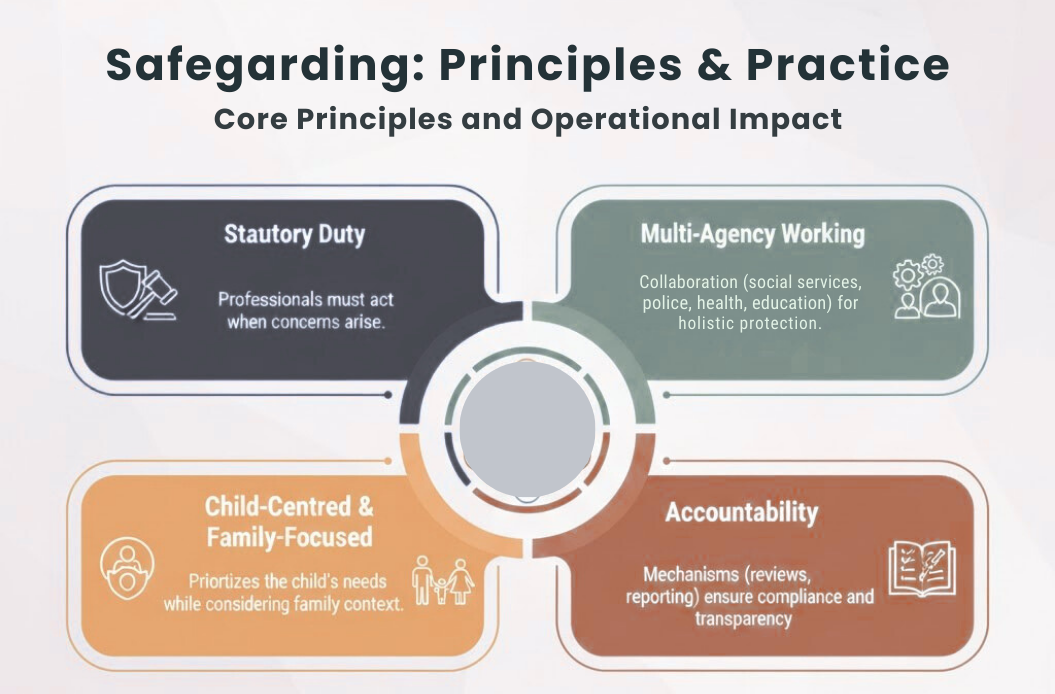
Safeguarding frameworks emphasize:
- Statutory Duty: Professionals must act when concerns arise.
- Multi-Agency Working: Collaboration between social services, police, health, and education ensures holistic protection.
- Child-Centred and Family-Focused: Guidance prioritizes the child’s needs while considering family context.
- Accountability: Mechanisms such as reviews and reporting ensure compliance and transparency.
Conclusion
The UK’s safeguarding system is comprehensive and dynamic, combining statutory duties, multi-agency cooperation, and accountability mechanisms.
By integrating child-focused and adult-protection laws with guidance and principles, these frameworks ensure that vulnerable individuals receive protection, support, and respect for their rights.
Continuous updates—such as those addressing domestic abuse and radicalization—reflect the evolving nature of safeguarding challenges, reinforcing the commitment to safety and well-being across society.