
Understanding Safeguarding Principles
Safeguarding principles are core values that guide how organisations protect children and adults at risk. They provide the ethical and practical foundation for every safeguarding policy, procedure, and action.
Safeguarding is the process of protecting a person’s health, wellbeing, and human rights so they can live free from harm, abuse, and neglect.
In the UK, adult safeguarding is underpinned by six key principles established in the Care Act 2014, and these principles apply across health and social care settings.
The scale of safeguarding work highlights its importance. There were an estimated 640,240 adult safeguarding concerns of abuse raised in 2024–25, up 4.0% from 615,530 in 2023–24 and 587,970 in 2022–23.
In England, nearly 50,000 children were on child protection plans as at 31 March 2025, around 1 in every 250 children.
Understanding these principles is essential because everything else in safeguarding flows from them; risk assessments, reporting mechanisms, staff training, and compliance all stem from these core values.
What Are Safeguarding Principles?
Safeguarding principles are core values that guide the protection of individuals at risk—children and adults—from harm, abuse, and neglect.
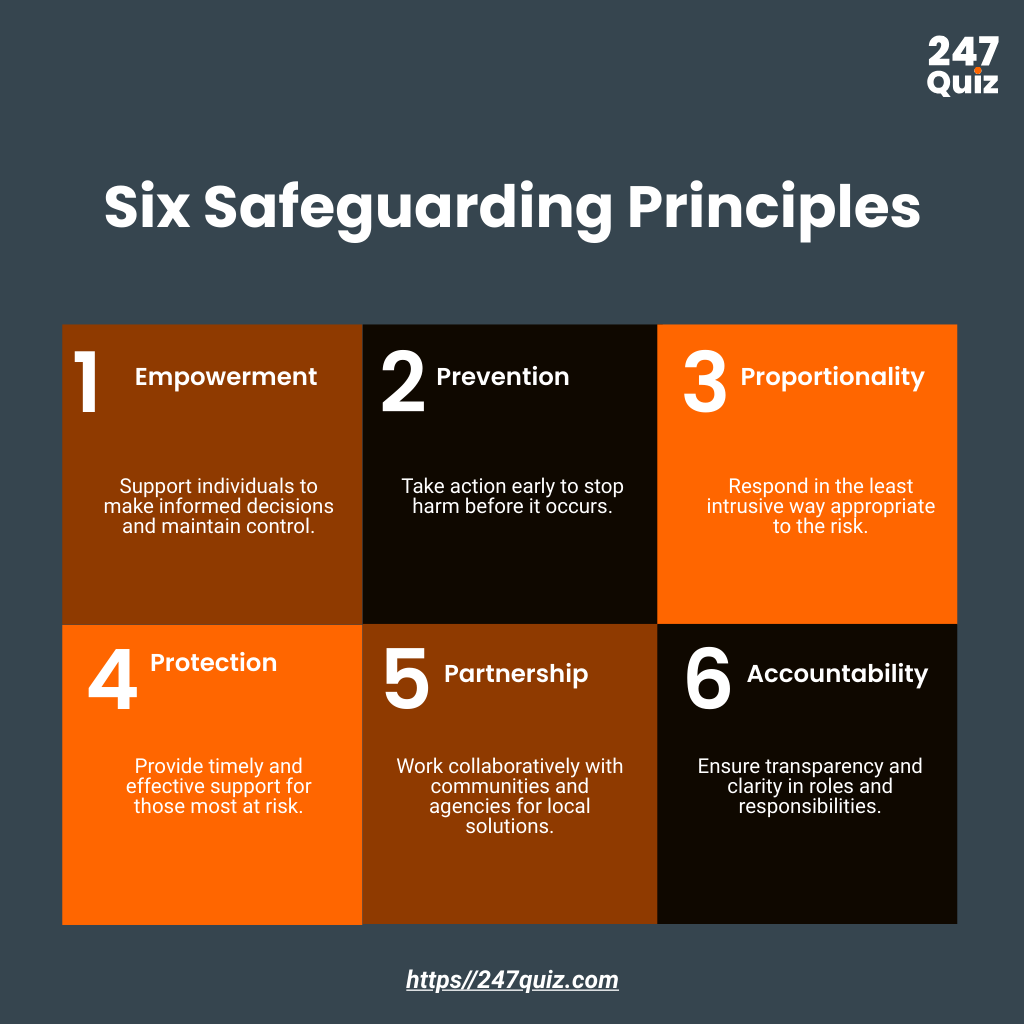
These principles focus on six key areas: Empowerment, Prevention, Proportionality, Protection, Partnership, and Accountability.
Together, they ensure that people are supported to make informed choices, action is taken before harm occurs, responses are the least intrusive necessary, help is provided when needed, communities work collaboratively, and transparency is maintained in all safeguarding practices.
Why Safeguarding Principles Matter
Safeguarding principles serve two critical purposes:
- Ethical Purpose: They uphold dignity, autonomy, and fairness. Safeguarding is not only about preventing harm but also about respecting individuals’ rights and choices.
- Practical Purpose: They provide a clear framework for consistent decision-making. In complex situations, principles act as a compass, ensuring responses are proportionate, transparent, and effective.
The Six Core Principles of Adult Safeguarding
These principles, set out in the Care Act 2014, apply to adults aged 18 or older who meet three criteria under Section 42:
- They have care and support needs.
- They are experiencing or at risk of abuse or neglect.
- Due to those needs, they cannot protect themselves.
Here’s an overview of each principle:
1. Empowerment
People should be supported to make their own decisions and give informed consent. This principle emphasizes autonomy and focuses on the individual’s desired outcomes.
Example: Involving an adult in creating their own safety plan rather than imposing one.
2. Prevention
It is always better to prevent harm than to respond after it occurs. Prevention includes proactive measures such as staff training, public awareness, and early intervention.
Example: Providing accessible information about financial scams to older adults.
3. Proportionality
Responses should be the least intrusive necessary while still addressing the risk. Over-intervention can be as harmful as under-intervention.
Example: Offering community support before considering restrictive care arrangements.
4. Protection
Those most at risk must receive timely and effective support. This principle ensures that safeguarding prioritizes vulnerable individuals.
Example: Immediate action when an adult is in imminent danger of abuse.
5. Partnership
Safeguarding works best when agencies, communities, and individuals collaborate. Local solutions and shared responsibility strengthen protection.
Example: Health services, social care, and police working together on a joint safeguarding plan.
6. Accountability
Transparency and clarity are essential. Everyone should understand their role in safeguarding and be responsible for their actions.
Example: Clear reporting procedures and documented decision-making processes.
Supporting Frameworks
Several frameworks reinforce these principles:
- Making Safeguarding Personal (MSP): A person-centered approach that focuses on the adult’s desired outcomes and control over their safety.
- Mental Capacity Act 2005: Protects individuals who may lack capacity to make decisions, starting with a presumption of capacity.
- The 6 R’s of Safeguarding: A practical guide for staff—Recognise, Respond, Record, Report, Refer, and Review.
Safeguarding Children: A Shared Responsibility
While these six principles were developed for adults, they are now widely applied to child safeguarding to ensure a consistent, person-centered approach.
Child protection in the UK is primarily guided by the Children Act 1989 and 2004 and the updated Working Together to Safeguard Children guidance.
Key legal principles for children include:
- The Paramountcy Principle: The child’s welfare is the primary consideration.
- The No Delay Principle: Cases must be handled swiftly to avoid harm.
- Parental Responsibility: Parents should be supported to care for their children unless the child is at risk.
Modern safeguarding also addresses online safety, with new duties under the Online Safety Act (2025/2026) requiring platforms to protect children from harmful content.
The goals of safeguarding principles are to empower individuals, prevent harm, apply proportionate responses, provide protection, foster effective partnerships, and ensure accountability. Together, these principles help prevent abuse and neglect, promote well-being, and give people greater control over their lives—ensuring services remain person-centred, ethical, and proactive.
Statutory Guidance and Updates for 2026
Working Together to Safeguard Children (2026):
The latest guidance reinforces a child-centered, whole-family approach, emphasizing the importance of building trusting relationships with parents while keeping the child’s safety at the heart of all decisions.
Keeping Children Safe in Education (KCSIE) 2025/2026:
Updated guidance for school staff highlights their critical role in the early identification of concerns and in preventing issues from escalating.
Online Safety Act (2025/2026):
New statutory duties require online platforms to protect children from harmful and age-inappropriate content, adding a vital digital dimension to safeguarding responsibilities.
Multi-Agency Child Protection Teams (MACPTs):
Ongoing reforms in 2026 are piloting more integrated teams across local authorities, police, and health services to improve information-sharing and decision-making for high-risk cases.
Reflective Questions on Safeguarding Principles
Click to reveal
Consider how these principles create a foundation for ethical and practical decision-making.
Click to reveal
Reflect on the importance of autonomy and informed choice in safeguarding.
Click to reveal
Think about situations where balancing risk and intervention is complex.
Click to reveal
Explore proactive measures and their impact on reducing harm before it occurs.
Click to reveal
Consider the role of collaboration between agencies, communities, and individuals.
Click to reveal
Reflect on how clear roles and responsibilities affect confidence in safeguarding systems.
Deepening Your Understanding
To explore these principles further, consult:
Conclusion
Safeguarding principles are the foundation of protection. They ensure that safeguarding is not just a policy but a lived reality, one that prioritizes dignity, safety, and respect for all.
The six safeguarding principles—Empowerment, Prevention, Proportionality, Protection, Partnership, and Accountability—are the foundation of this commitment.
They guide every decision, policy, and action, ensuring that safeguarding is consistent, transparent, and person-centered.
By embedding these principles into practice, professionals create systems that are ethical, effective, and person-centered.