
Prevention in Safeguarding Adults
Prevention is one of the six core principles of safeguarding, as outlined in the Care Act 2014, and it is built on the philosophy that taking proactive action to stop abuse or neglect before it occurs is far more effective than dealing with the consequences afterward.
Safeguarding adults is a fundamental duty within health, social care, and community services, aimed at protecting individuals from abuse and neglect while promoting their right to live safely and independently.
Prevention is a central concept within safeguarding practice and is one of the six core principles of the Care Act 2014, which states that it is “better to take action before harm occurs.”
A strong focus on prevention helps reduce the likelihood of abuse, minimises risk, and supports adults to maintain dignity, choice, and control over their lives.
Understanding Prevention in Safeguarding Adults
Prevention in safeguarding adults refers to proactive measures taken to stop abuse or neglect before it happens. Rather than waiting for a crisis to occur, preventative safeguarding focuses on early identification of risks, building resilience, and creating supportive environments.
This approach recognises that vulnerability is not fixed; anyone can become vulnerable due to changes in health, relationships, finances, or social circumstances.
The Care Act 2014 emphasises that safeguarding should be person-centred, meaning adults are involved in decisions about their care and protection wherever possible.
Prevention therefore focuses on empowerment, education, and support, enabling individuals to live safely while reducing reliance on reactive safeguarding responses. Within the six principles of safeguarding adults, prevention follows empowerment and emphasises taking action before harm occurs.
What Is Prevention in the Safeguarding Principles?
Prevention, the second of the six SCIE Safeguarding Principles, involves taking action to stop abuse or neglect before it occurs. It focuses on proactive measures such as providing information, offering training, and identifying risks to support individuals in staying safe.
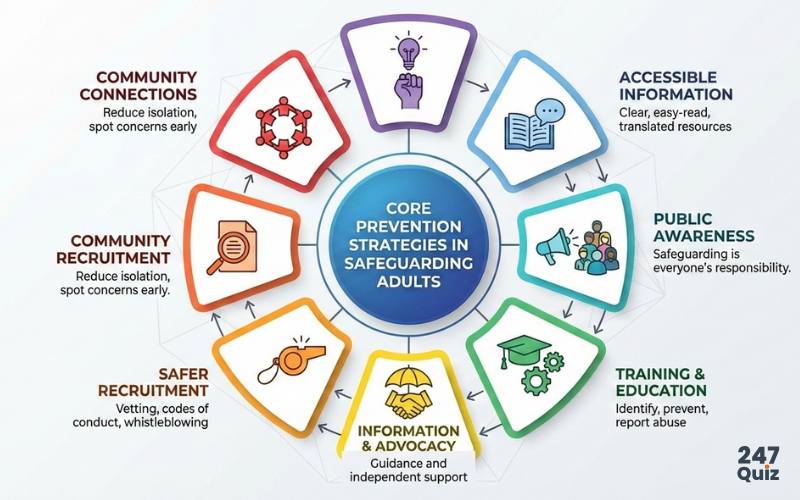
Core Prevention Strategies
Effective prevention in Safeguarding adults relies on a range of interlinked strategies that involve individuals, professionals, organisations, and communities.
Empowerment is central to prevention. Adults should be supported to recognise signs of abuse, understand their rights, and know how to seek help.
Providing clear, accessible information, such as easy-read documents or translated materials, ensures individuals can make informed decisions and take action if they feel unsafe.
Public awareness is equally important. Safeguarding is not solely the responsibility of professionals; communities also play a vital role.
Agencies must ensure the public knows how to recognise different forms of abuse, including physical, emotional, financial, sexual abuse, neglect, and exploitation, and understands how to report concerns appropriately.
Training and education are key preventative tools. Mandatory safeguarding training for staff and volunteers ensures they can identify early indicators of harm, understand their responsibilities, and follow correct reporting procedures.
Ongoing refresher training helps maintain awareness and reinforces best practice.
Information and advice services are another essential element of prevention. Local authorities have a duty to provide accessible information about staying safe, available support services, and how to access help, including independent advocacy services.
Advocacy is particularly important for adults who may have difficulty expressing their views or understanding complex processes.
Safer recruitment practices also play a crucial role in prevention. Robust vetting procedures, including Disclosure and Barring Service (DBS) checks, help prevent unsuitable individuals from working with adults at risk.
Clear codes of conduct, supervision, and whistleblowing procedures further reduce opportunities for abuse.
Finally, community links are vital in preventing abuse. Social isolation significantly increases vulnerability.
Building strong community networks, such as local groups, voluntary organisations, and neighbourhood initiatives, reduces isolation and increases the likelihood that concerns are noticed and reported early.
The Three Levels of Prevention
Prevention in safeguarding adults is often described across three distinct levels: primary, secondary, and tertiary prevention.
Primary prevention (wellbeing)
This focuses on universal services that promote safety and wellbeing for all adults. This includes creating safe neighbourhoods, promoting healthy lifestyles, reducing poverty, and ensuring access to healthcare and social opportunities. These measures reduce the overall likelihood of abuse occurring.
Secondary prevention (early intervention)
This targets adults who may be at increased risk of abuse or neglect. This may include individuals with learning disabilities, mental health conditions, or those experiencing social isolation or financial difficulties. Early support, such as additional care services, social engagement opportunities, or practical assistance, can prevent risks from escalating.
Tertiary prevention (adult protection)
This involves interventions for adults who have already experienced abuse or neglect. The aim is to prevent further harm and support recovery. This may include safeguarding enquiries, protection plans, therapeutic support, and changes to care arrangements. Learning from these cases also helps improve future preventative practice.
Key Professional Frameworks
Professionals across health, social care, and community services often use structured frameworks to support preventative safeguarding.
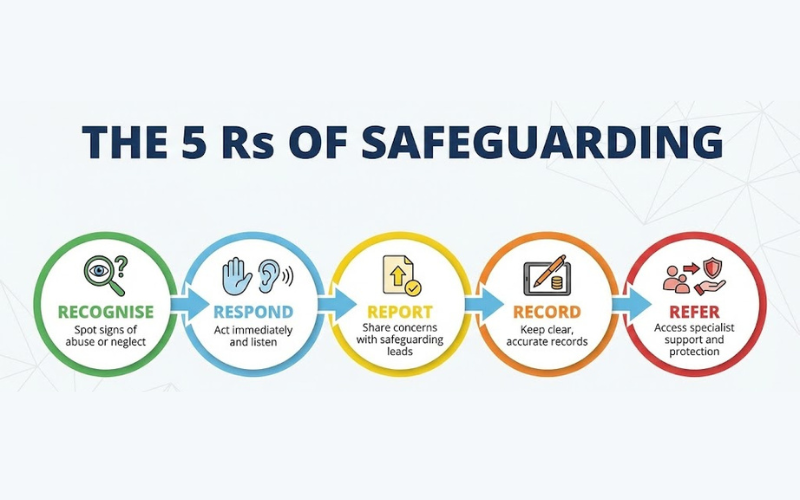
One commonly used approach is the “5 Rs”, which act as a preventative checklist.
- Recognise: Identifying signs and indicators of abuse or neglect.
- Respond: Taking immediate action to ensure safety and listen to the individual.
- Report: Sharing concerns with the appropriate safeguarding authorities.
- Record: Keeping accurate, detailed, and timely records of concerns and actions taken.
- Refer: Ensuring the adult receives appropriate specialist support and protection.
Using frameworks such as the 5 Rs promotes consistency, accountability, and early action, all of which strengthen prevention.
How to prevent abuse in vulnerable adults?
- Empower adults to understand their rights and make informed choices
- Provide accessible information and independent advocacy services
- Raise awareness of different types and signs of abuse
- Encourage adults to report concerns and speak up
- Reduce social isolation through community engagement and support
- Identify risks early through observation and regular assessments
- Offer early intervention to prevent situations from escalating
- Use safer recruitment practices, including DBS checks
- Ensure staff and volunteers receive regular safeguarding training
- Maintain clear safeguarding policies and procedures
- Promote a culture of openness and whistleblowing
- Follow safeguarding frameworks such as the “5 Rs”
- Work in partnership with health, social care, and community services
Test Your Knowledge on Preventive Safeguarding Principles | Pass Mark 80%
This short quiz is designed to support learning and awareness of Prevention in Safeguarding Adults, as outlined in the Care Act 2014. It is for learning purposes only and does not assess professional competence or replace organisational safeguarding procedures.
Conclusion
Prevention in safeguarding adults is about more than avoiding harm; it is about promoting wellbeing, independence, and dignity.
As a core principle of the Care Act 2014, prevention encourages early action, empowerment, and collaboration between individuals, professionals, and communities.
By focusing on awareness, education, safer systems, and strong support networks, safeguarding practice can move from crisis response to proactive protection.
Ultimately, effective prevention creates safer environments where adults are supported to live fulfilling lives free from abuse and neglect.