
Moving and Handling Quiz.
Practice with these moving and handling questions and learn how this knowledge can help you work safely, prevent injuries, and support others with confidence.
About Quiz.
This Moving and Handling Training Quiz features comprehensive questions covering key topics such as the TILE risk-assessment framework, safe lifting techniques and weight limits, proper use of equipment including hoists, slide sheets, and handling belts, relevant legislation and regulations, kinetic-handling principles, patient dignity and safety, ergonomics and injury prevention, and effective risk-assessment procedures. You have a total of 150 Questions and Answers to practice with.
MOVING AND HANDLING TRAINING QUIZ – (1-30 QUESTIONS)
Question 1
What does the acronym TILE stand for in manual handling risk assessment?
a) Task, Individual, Load, Environment
b) Time, Injury, Load, Equipment
c) Training, Inspection, Lifting, Evaluation
d) Technique, Injury, Load, Ergonomics
Question 2
Which of the following is the primary legislation governing manual handling in the UK?
a) Health and Safety at Work Act 1974
b) Manual Handling Operations Regulations 1992
c) Control of Substances Hazardous to Health Regulations 2002
d) Provision and Use of Work Equipment Regulations 1998
Question 3
What is the first step in safe manual handling?
a) Lift the load immediately
b) Assess the risk
c) Use mechanical aids without checking
d) Ignore the weight if it feels light
Question 4
When lifting a load, where should you position your feet?
a) Close together for balance
b) Shoulder-width apart with one foot slightly forward
c) Crossed for stability
d) As far apart as possible
Question 5
What is a common injury associated with poor manual handling techniques?
a) Musculoskeletal disorders
b) Respiratory issues
c) Hearing loss
d) Skin irritation
Question 6
In manual handling, what does ‘avoid’ mean in the hierarchy of control?
a) Avoid assessing the risk
b) Avoid manual handling if possible
c) Avoid using equipment
d) Avoid training sessions
Question 7
When handling a person, what principle emphasizes respecting their dignity?
a) Ergonomic lifting
b) Person-centered approach
c) Mechanical aid priority
d) Weight distribution
Question 8
What should you do if a load is too heavy to lift alone?
a) Lift it anyway to save time
b) Seek assistance or use equipment
c) Drag it across the floor
d) Ignore it and move on
Question 9
Which factor is NOT part of the ‘Individual’ in TILE assessment?
a) Capability and fitness
b) Training and experience
c) Weather conditions
d) Any health conditions
Question 10
What is the recommended way to bend when lifting?
a) Bend at the waist
b) Bend at the knees and hips
c) Twist the body
d) Reach overhead
Question 11
In healthcare settings, what equipment might be used for moving patients?
a) Hoist or sling
b) Forklift
c) Ladder
d) Hammer
Question 12
What does ‘kinetic lifting’ refer to?
a) Lifting without movement
b) Using body momentum for smooth lifting
c) Static holding of loads
d) Lifting with arms only
Question 13
Employers must provide what for manual handling?
a) Free meals
b) Adequate training and information
c) Unlimited breaks
d) Personal vehicles
Question 14
When carrying a load, how should you hold it?
a) Away from the body
b) Close to the body
c) Above head height
d) At arm’s length
Question 15
What is a key sign of a hazardous manual handling task?
a) Repetitive movements
b) Comfortable posture
c) Short duration
d) Light weight
Question 16
In risk assessment, what does ‘Load’ refer to?
a) The person’s mood
b) Weight, shape, and stability of the object
c) Time of day
d) Color of the item
Question 17
Why is twisting while lifting dangerous?
a) It improves balance
b) It strains the spine
c) It speeds up the process
d) It reduces weight
Question 18
What should be checked before using handling equipment?
a) Its color
b) If it’s in good condition and suitable
c) The weather
d) Nearby furniture
Question 19
In manual handling training, what is emphasized for team lifts?
a) Communication and coordination
b) Individual strength
c) Speed
d) Competition
Question 20
What is the purpose of a manual handling policy in the workplace?
a) To increase workloads
b) To outline safe practices and responsibilities
c) To reduce staff numbers
d) To ignore risks
Question 21
When lowering a load, what technique should be used?
a) Drop it quickly
b) Bend knees and keep back straight
c) Twist to place it
d) Use only one hand
Question 22
What environmental factor in TILE could include slippery floors?
a) Task
b) Individual
c) Load
d) Environment
Question 23
For handling awkward loads, what is advised?
a) Ignore the shape
b) Break it down or use aids
c) Lift higher
d) Push instead of pull
Question 24
What is a benefit of good posture in manual handling?
a) Increases injury risk
b) Reduces strain on muscles and joints
c) Slows down work
d) Makes loads heavier
Question 25
In people handling, what assessment tool is commonly used?
a) TILE only
b) Mobility assessment
c) Financial audit
d) Weather check
Question 26
What should you avoid when pushing or pulling?
a) Using body weight
b) Sudden jerks
c) Stable footing
d) Clear paths
Question 27
How often should manual handling training be refreshed?
a) Never
b) Regularly, as per workplace policy
c) Only once
d) Every 10 years
Question 28
What does ‘reduce’ mean in the manual handling hierarchy?
a) Reduce training
b) Reduce the risk if avoidance isn’t possible
c) Reduce equipment use
d) Reduce breaks
Question 29
In emergency situations, is manual handling training still applicable?
a) No, ignore all rules
b) Yes, apply principles where possible
c) Only for light loads
d) Training doesn’t cover emergencies
Question 30
What is the main goal of moving and handling training?
a) To increase speed
b) To prevent injuries and promote safety
c) To reduce costs
d) To eliminate all handling
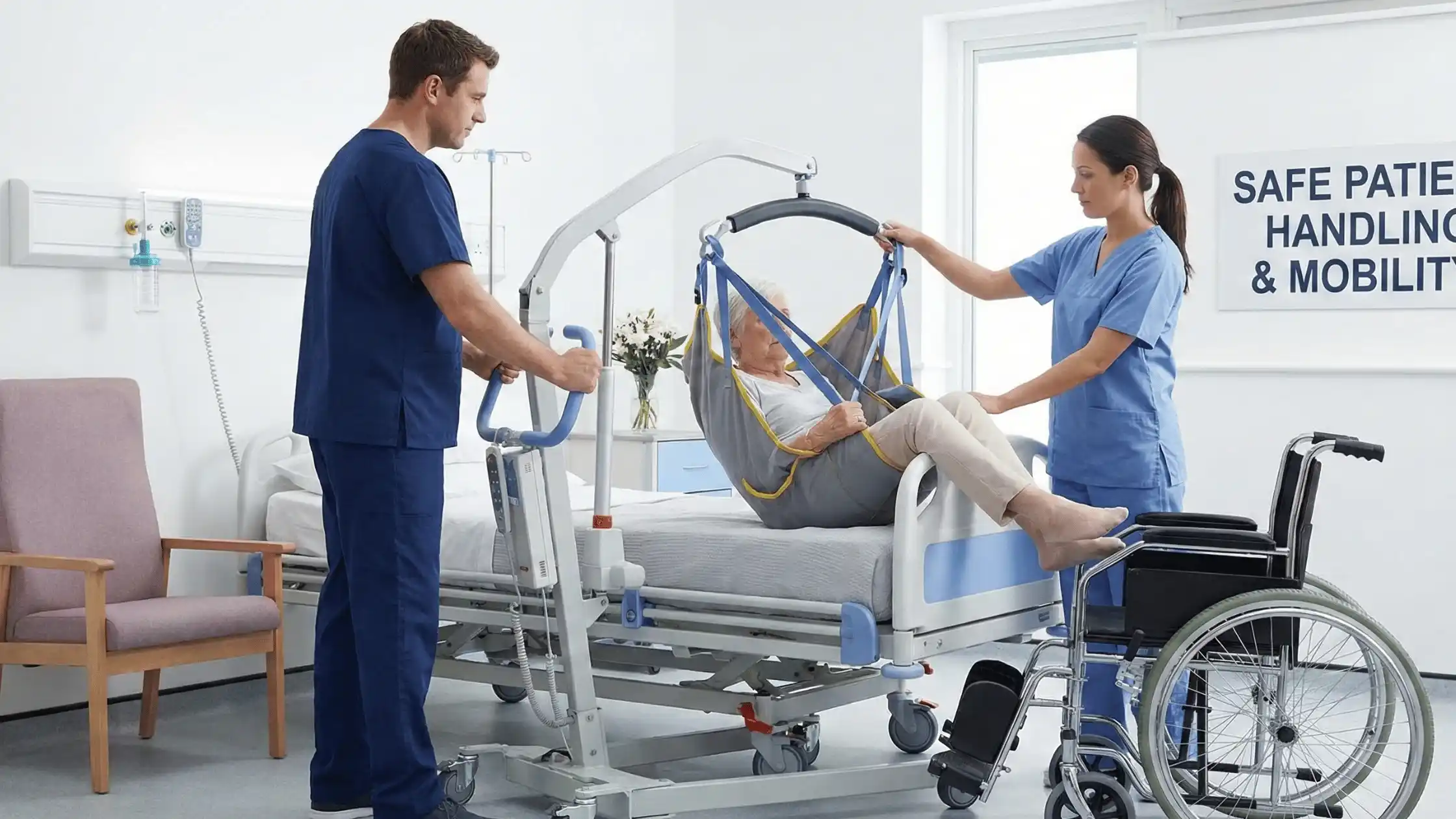
Moving & Handling ANSWER KEY
- a – Task, Individual, Load, Environment
- b – Manual Handling Operations Regulations 1992
- b – Assess the risk
- b – Shoulder-width apart with one foot slightly forward
- a – Musculoskeletal disorders
- b – Avoid manual handling if possible
- b – Person-centered approach
- b – Seek assistance or use equipment
- c – Weather conditions
- b – Bend at the knees and hips
- a – Hoist or sling
- b – Using body momentum for smooth lifting
- b – Adequate training and information
- b – Close to the body
- a – Repetitive movements
- b – Weight, shape, and stability of the object
- b – It strains the spine
- b – If it’s in good condition and suitable
- a – Communication and coordination
- b – To outline safe practices and responsibilities
- b – Bend knees and keep back straight
- d – Environment
- b – Break it down or use aids
- b – Reduces strain on muscles and joints
- b – Mobility assessment
- b – Sudden jerks
- b – Regularly, as per workplace policy
- b – Reduce the risk if avoidance isn’t possible
- b – Yes, apply principles where possible
- b – To prevent injuries and promote safety
Moving and Handling Questions(31-60)
Question 31
What does PPE stand for in the context of manual handling?
a) Personal Protection Equipment
b) Personal Protective Equipment
c) Professional Practical Equipment
d) Proper Positioning Equipment
Question 32
Which part of the body is most commonly injured during manual handling?
a) Arms
b) Lower back
c) Legs
d) Neck
Question 33
What is the safe zone for lifting in relation to your body?
a) Between shoulder and floor
b) Between knuckle and shoulder height
c) Above head height
d) Below knee height
Question 34
When using a sliding sheet, how many are typically required?
a) One
b) Two
c) Three
d) Four
Question 35
What is the maximum recommended angle when pulling or pushing a load?
a) 90 degrees
b) 45 degrees
c) 20 degrees
d) 180 degrees
Question 36
Which of these is NOT a type of manual handling aid?
a) Trolley
b) Conveyor belt
c) Office chair
d) Patient hoist
Question 37
What does the term ‘ergonomic’ mean?
a) Expensive equipment
b) Designed to maximize efficiency and safety
c) Old-fashioned methods
d) Emergency procedures
Question 38
Before lifting, you should test the weight by:
a) Lifting it quickly
b) Attempting a small lift or pushing gently
c) Guessing based on size
d) Asking someone else to lift it first
Question 39
What is a contraindication for manual patient handling?
a) Patient cooperation
b) Recent spinal surgery or injury
c) Good communication
d) Available equipment
Question 40
How should you position yourself when using a hoist?
a) Standing directly under the hoist
b) At a safe distance where you can operate controls
c) Behind the patient
d) On a chair
Question 41
What is the purpose of a risk assessment review?
a) To increase paperwork
b) To ensure controls remain effective
c) To blame workers
d) To reduce training
Question 42
Which grip is strongest when lifting?
a) Fingertip grip
b) Pinch grip
c) Power grip (whole hand)
d) One-finger grip
Question 43
What should you do if you witness unsafe manual handling practices?
a) Ignore it
b) Report it to a supervisor
c) Join in to help
d) Laugh about it
Question 44
The ‘Task’ element of TILE includes:
a) Physical effort required
b) Employee’s age
c) Type of flooring
d) Shape of the load
Question 45
What is bariatric equipment designed for?
a) Children only
b) Patients with higher body weight
c) Emergency situations
d) Outdoor use
Question 46
When should you review a patient’s handling plan?
a) Never
b) When their condition changes
c) Every 5 years
d) Only on admission
Question 47
What does a red tag on equipment typically indicate?
a) It’s new
b) It’s faulty and should not be used
c) It’s for emergency use only
d) It’s the most expensive
Question 48
Which of these is a sign of manual handling fatigue?
a) Increased alertness
b) Loss of coordination or grip strength
c) Improved performance
d) Faster work rate
Question 49
What is the correct breathing technique when lifting?
a) Hold your breath throughout
b) Breathe out during exertion
c) Breathe rapidly
d) Only breathe at the top
Question 50
Who has the ultimate responsibility for workplace safety?
a) Employees only
b) The employer
c) Health and Safety Executive
d) Customers
Question 51
What does a handling assessment chart for patients typically include?
a) Their favorite food
b) Mobility level and required assistance
c) Family contact details
d) Medical history only
Question 52
When is it acceptable to lift a patient manually without equipment?
a) When you’re in a hurry
b) In life-threatening emergencies only
c) Whenever they ask
d) During night shifts
Question 53
What is the recommended rest period after sustained manual handling?
a) No breaks needed
b) Regular breaks as per policy
c) Only at lunchtime
d) Once a week
Question 54
Which of these factors increases manual handling risk?
a) Good lighting
b) Adequate space
c) Unstable or uneven loads
d) Proper training
Question 55
What is a transfer board used for?
a) Writing notes
b) Bridging gaps when moving seated patients
c) Exercising
d) Measuring weight
Question 56
The hierarchy of control in manual handling is:
a) Avoid, Assess, Reduce
b) Lift, Move, Lower
c) Plan, Do, Review
d) Think, Act, Report
Question 57
What should be included in manual handling training records?
a) Employee’s home address
b) Date, content, and attendee signatures
c) Salary information
d) Personal opinions
Question 58
When should incident reports be completed?
a) Only for serious injuries
b) For all incidents and near misses
c) Once per month
d) Never
Question 59
What does dynamic risk assessment mean?
a) Assessing risks once annually
b) Continuously evaluating risks as situations change
c) Only assessing after an accident
d) Guessing the risks
Question 60
Which statement about manual handling is TRUE?
a) Young, fit people cannot be injured
b) Injuries only happen with heavy loads
c) Anyone can be injured by poor technique
d) Training is only for new employees
Moving & Handling ANSWER KEY
- a – Task, Individual, Load, Environment
- b – Manual Handling Operations Regulations 1992
- b – Assess the risk
- b – Shoulder-width apart with one foot slightly forward
- a – Musculoskeletal disorders
- b – Avoid manual handling if possible
- b – Person-centered approach
- b – Seek assistance or use equipment
- c – Weather conditions
- b – Bend at the knees and hips
- a – Hoist or sling
- b – Using body momentum for smooth lifting
- b – Adequate training and information
- b – Close to the body
- a – Repetitive movements
- b – Weight, shape, and stability of the object
- b – It strains the spine
- b – If it’s in good condition and suitable
- a – Communication and coordination
- b – To outline safe practices and responsibilities
- b – Bend knees and keep back straight
- d – Environment
- b – Break it down or use aids
- b – Reduces strain on muscles and joints
- b – Mobility assessment
- b – Sudden jerks
- b – Regularly, as per workplace policy
- b – Reduce the risk if avoidance isn’t possible
- b – Yes, apply principles where possible
- b – To prevent injuries and promote safety
Moving and Handling Questions(31-60)
Question 31
What does PPE stand for in the context of manual handling?
a) Personal Protection Equipment
b) Personal Protective Equipment
c) Professional Practical Equipment
d) Proper Positioning Equipment
Question 32
Which part of the body is most commonly injured during manual handling?
a) Arms
b) Lower back
c) Legs
d) Neck
Question 33
What is the safe zone for lifting in relation to your body?
a) Between shoulder and floor
b) Between knuckle and shoulder height
c) Above head height
d) Below knee height
Question 34
When using a sliding sheet, how many are typically required?
a) One
b) Two
c) Three
d) Four
Question 35
What is the maximum recommended angle when pulling or pushing a load?
a) 90 degrees
b) 45 degrees
c) 20 degrees
d) 180 degrees
Question 36
Which of these is NOT a type of manual handling aid?
a) Trolley
b) Conveyor belt
c) Office chair
d) Patient hoist
Question 37
What does the term ‘ergonomic’ mean?
a) Expensive equipment
b) Designed to maximize efficiency and safety
c) Old-fashioned methods
d) Emergency procedures
Question 38
Before lifting, you should test the weight by:
a) Lifting it quickly
b) Attempting a small lift or pushing gently
c) Guessing based on size
d) Asking someone else to lift it first
Question 39
What is a contraindication for manual patient handling?
a) Patient cooperation
b) Recent spinal surgery or injury
c) Good communication
d) Available equipment
Question 40
How should you position yourself when using a hoist?
a) Standing directly under the hoist
b) At a safe distance where you can operate controls
c) Behind the patient
d) On a chair
Question 41
What is the purpose of a risk assessment review?
a) To increase paperwork
b) To ensure controls remain effective
c) To blame workers
d) To reduce training
Question 42
Which grip is strongest when lifting?
a) Fingertip grip
b) Pinch grip
c) Power grip (whole hand)
d) One-finger grip
Question 43
What should you do if you witness unsafe manual handling practices?
a) Ignore it
b) Report it to a supervisor
c) Join in to help
d) Laugh about it
Question 44
The ‘Task’ element of TILE includes:
a) Physical effort required
b) Employee’s age
c) Type of flooring
d) Shape of the load
Question 45
What is bariatric equipment designed for?
a) Children only
b) Patients with higher body weight
c) Emergency situations
d) Outdoor use
Question 46
When should you review a patient’s handling plan?
a) Never
b) When their condition changes
c) Every 5 years
d) Only on admission
Question 47
What does a red tag on equipment typically indicate?
a) It’s new
b) It’s faulty and should not be used
c) It’s for emergency use only
d) It’s the most expensive
Question 48
Which of these is a sign of manual handling fatigue?
a) Increased alertness
b) Loss of coordination or grip strength
c) Improved performance
d) Faster work rate
Question 49
What is the correct breathing technique when lifting?
a) Hold your breath throughout
b) Breathe out during exertion
c) Breathe rapidly
d) Only breathe at the top
Question 50
Who has the ultimate responsibility for workplace safety?
a) Employees only
b) The employer
c) Health and Safety Executive
d) Customers
Question 51
What does a handling assessment chart for patients typically include?
a) Their favorite food
b) Mobility level and required assistance
c) Family contact details
d) Medical history only
Question 52
When is it acceptable to lift a patient manually without equipment?
a) When you’re in a hurry
b) In life-threatening emergencies only
c) Whenever they ask
d) During night shifts
Question 53
What is the recommended rest period after sustained manual handling?
a) No breaks needed
b) Regular breaks as per policy
c) Only at lunchtime
d) Once a week
Question 54
Which of these factors increases manual handling risk?
a) Good lighting
b) Adequate space
c) Unstable or uneven loads
d) Proper training
Question 55
What is a transfer board used for?
a) Writing notes
b) Bridging gaps when moving seated patients
c) Exercising
d) Measuring weight
Question 56
The hierarchy of control in manual handling is:
a) Avoid, Assess, Reduce
b) Lift, Move, Lower
c) Plan, Do, Review
d) Think, Act, Report
Question 57
What should be included in manual handling training records?
a) Employee’s home address
b) Date, content, and attendee signatures
c) Salary information
d) Personal opinions
Question 58
When should incident reports be completed?
a) Only for serious injuries
b) For all incidents and near misses
c) Once per month
d) Never
Question 59
What does dynamic risk assessment mean?
a) Assessing risks once annually
b) Continuously evaluating risks as situations change
c) Only assessing after an accident
d) Guessing the risks
Question 60
Which statement about manual handling is TRUE?
a) Young, fit people cannot be injured
b) Injuries only happen with heavy loads
c) Anyone can be injured by poor technique
d) Training is only for new employees
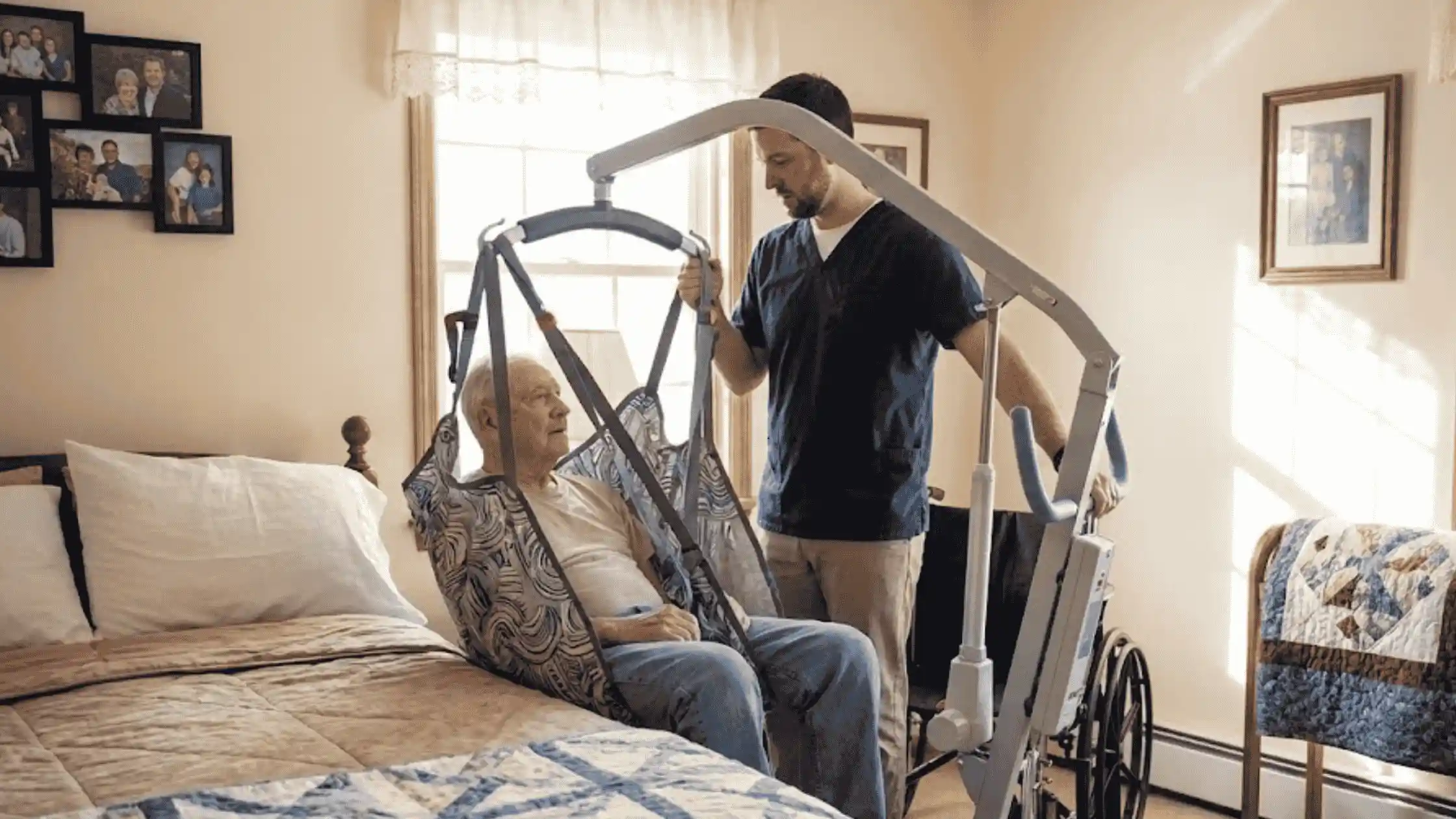
Moving and Handling ANSWER KEY (Questions 31-60)
- b – Personal Protective Equipment
- b – Lower back
- b – Between knuckle and shoulder height
- b – Two
- c – 20 degrees
- c – Office chair
- b – Designed to maximize efficiency and safety
- b – Attempting a small lift or pushing gently
- b – Recent spinal surgery or injury
- b – At a safe distance where you can operate controls
- b – To ensure controls remain effective
- c – Power grip (whole hand)
- b – Report it to a supervisor
- a – Physical effort required
- b – Patients with higher body weight
- b – When their condition changes
- b – It’s faulty and should not be used
- b – Loss of coordination or grip strength
- b – Breathe out during exertion
- b – The employer
- b – Mobility level and required assistance
- b – In life-threatening emergencies only
- b – Regular breaks as per policy
- c – Unstable or uneven loads
- b – Bridging gaps when moving seated patients
- a – Avoid, Assess, Reduce
- b – Date, content, and attendee signatures
- b – For all incidents and near misses
- b – Continuously evaluating risks as situations change
- c – Anyone can be injured by poor technique
Moving and Handling Training Quiz (40 additional questions (61-100) )
Question 61
What should you do before moving a patient in bed?
a) Start moving immediately
b) Explain the procedure and gain consent
c) Turn off all lights
d) Remove all bedding first
Question 62
Which of the following describes ‘static load’?
a) A load that is moving
b) Holding a load in one position for a period
c) A load on wheels
d) Equipment that is switched off
Question 63
What is the purpose of a handling sling?
a) To carry documents
b) To support patients during hoisting
c) To store equipment
d) To measure height
Question 64
When should gloves be worn during manual handling?
a) Never
b) When there’s risk of contamination or injury
c) Only in winter
d) All the time regardless of task
Question 65
What does ‘manual handling’ include?
a) Only lifting
b) Lifting, lowering, pushing, pulling, carrying
c) Just carrying
d) Only pushing and pulling
Question 66
Which is the correct procedure when using a standing hoist?
a) Rush the process
b) Check patient’s weight capacity and equipment limits
c) Use it without training
d) Operate it alone always
Question 67
What is ‘compliance’ in relation to manual handling?
a) Ignoring the rules
b) Following policies and procedures
c) Working faster
d) Avoiding all equipment
Question 68
How should you communicate during a team lift?
a) Don’t talk, just lift
b) One person leads with clear commands
c) Everyone shouts at once
d) Use hand signals only
Question 69
What factors affect a person’s lifting capacity?
a) Hair color
b) Age, fitness, health, training
c) Shoe size
d) Favorite food
Question 70
When is pushing preferable to pulling?
a) Never
b) Generally, as you can see where you’re going
c) Only outdoors
d) When going backwards
Question 71
What is a ‘near miss’ in manual handling?
a) Successfully completing a task
b) An incident that could have caused injury but didn’t
c) Missing training
d) Being nearly late to work
Question 72
Which assessment is used specifically for patient moving and handling?
a) Financial assessment
b) TILE and mobility assessment
c) Performance review
d) Building assessment
Question 73
What should happen if equipment fails during use?
a) Continue using it
b) Stop immediately, ensure safety, report it
c) Try to fix it yourself
d) Hide the problem
Question 74
What does ‘load distribution’ mean?
a) Sharing the weight evenly
b) Throwing loads
c) Stacking items
d) Load size only
Question 75
When carrying a load up stairs, who should be positioned where in a two-person carry?
a) Stronger person at the top
b) Stronger person at the bottom
c) It doesn’t matter
d) One person should do it alone
Question 76
What is the maximum recommended carrying distance before rest?
a) 10 meters
b) Depends on load weight and individual capability
c) 100 meters
d) 1 kilometer
Question 77
Which of these is a ‘red flag’ for back injury risk?
a) Proper footwear
b) Repetitive bending and twisting
c) Good posture
d) Adequate breaks
Question 78
What does ‘work-related upper limb disorder’ (WRULD) refer to?
a) Skin conditions
b) Injuries to arms, hands, shoulders from repetitive tasks
c) Heart problems
d) Breathing difficulties
Question 79
When should a manual handling risk assessment be reviewed?
a) Only when someone is injured
b) After significant changes or incidents
c) Never
d) Every 20 years
Question 80
What is the purpose of anti-slip footwear in manual handling?
a) Fashion
b) To prevent slips and maintain stability
c) To make noise
d) No real purpose
Question 81
Which legislation requires employers to avoid hazardous manual handling where possible?
a) Employment Act
b) Manual Handling Operations Regulations 1992
c) Data Protection Act
d) Building Regulations
Question 82
What is a ‘handling profile’ for a patient?
a) Their photograph
b) Documented assessment of mobility and handling needs
c) Their medical records
d) Their family tree
Question 83
When should you refuse to carry out a manual handling task?
a) Whenever you feel like it
b) When it’s unsafe and risks cannot be controlled
c) Every day
d) Never, you must always comply
Question 84
What is the purpose of a ‘banana board’?
a) Serving food
b) Sliding transfer aid for lateral patient moves
c) Exercise equipment
d) Writing surface
Question 85
How should trolleys and carts be loaded?
a) Pile everything on top
b) Heavier items at the bottom, load evenly
c) Only on one side
d) As high as possible
Question 86
What does ‘biomechanics’ study?
a) Plant life
b) Mechanical laws relating to movement of living organisms
c) Weather patterns
d) Chemical reactions
Question 87
When should back supports or belts be used?
a) As a replacement for proper technique
b) Only if recommended after individual assessment
c) By everyone, all the time
d) Never under any circumstances
Question 88
What is ‘independent mobility’?
a) Patient can move without assistance
b) Staff working alone
c) Equipment that works automatically
d) Working from home
Question 89
Which type of flooring presents the highest manual handling risk?
a) Non-slip, level surface
b) Wet, uneven, or damaged flooring
c) Carpeted areas
d) Wooden floors
Question 90
What should be considered when handling loads in confined spaces?
a) Nothing different
b) Limited movement, ventilation, escape routes
c) Only the load weight
d) Time of day
Question 91
What is a ‘sit-to-stand’ aid?
a) A chair
b) Equipment to assist patients moving from sitting to standing
c) A table
d) A bed
Question 92
When multiple handling tasks are required, what should you do?
a) Rush through them all
b) Pace yourself and take breaks
c) Do them all without stopping
d) Delegate everything
Question 93
What does ‘duty of care’ mean in manual handling?
a) Cleaning duties
b) Legal obligation to ensure safety and wellbeing
c) Working overtime
d) Paying fees
Question 94
Which of these affects the stability of a load?
a) Its color
b) Its center of gravity and contents
c) The day of the week
d) Who packed it
Question 95
What is the purpose of regular equipment servicing?
a) To waste money
b) To ensure it remains safe and functional
c) To keep engineers employed
d) No real purpose
Question 96
When should you seek additional help with manual handling?
a) Never
b) When task exceeds your capability or assessed safe limits
c) Only if you like company
d) Every single time
Question 97
What is a ‘passive hoist’?
a) A hoist that does nothing
b) A mobile or ceiling hoist for non-weight bearing patients
c) Old equipment
d) Training equipment only
Question 98
Which principle helps prevent injury when reaching?
a) Stretch as far as possible
b) Keep loads within easy reach, avoid overreaching
c) Stand on tiptoes
d) Lean as far as you can
Question 99
What should you do if a patient refuses assistance with moving?
a) Force them to comply
b) Respect their wishes, document, reassess
c) Ignore them and continue
d) Leave them alone permanently
Question 100
What is the key message of manual handling training?
a) Speed is most important
b) Safety first, assess risks, use correct techniques
c) Strength matters most
d) Equipment is unnecessary
Moving and Handling Question and ANSWER KEY (Questions 61-100)
- b – Explain the procedure and gain consent
- b – Holding a load in one position for a period
- b – To support patients during hoisting
- b – When there’s risk of contamination or injury
- b – Lifting, lowering, pushing, pulling, carrying
- b – Check patient’s weight capacity and equipment limits
- b – Following policies and procedures
- b – One person leads with clear commands
- b – Age, fitness, health, training
- b – Generally, as you can see where you’re going
- b – An incident that could have caused injury but didn’t
- b – TILE and mobility assessment
- b – Stop immediately, ensure safety, report it
- a – Sharing the weight evenly
- b – Stronger person at the bottom
- b – Depends on load weight and individual capability
- b – Repetitive bending and twisting
- b – Injuries to arms, hands, shoulders from repetitive tasks
- b – After significant changes or incidents
- b – To prevent slips and maintain stability
- b – Manual Handling Operations Regulations 1992
- b – Documented assessment of mobility and handling needs
- b – When it’s unsafe and risks cannot be controlled
- b – Sliding transfer aid for lateral patient moves
- b – Heavier items at the bottom, load evenly
- b – Mechanical laws relating to movement of living organisms
- b – Only if recommended after individual assessment
- a – Patient can move without assistance
- b – Wet, uneven, or damaged flooring
- b – Limited movement, ventilation, escape routes
- b – Equipment to assist patients moving from sitting to standing
- b – Pace yourself and take breaks
- b – Legal obligation to ensure safety and wellbeing
- b – Its center of gravity and contents
- b – To ensure it remains safe and functional
- b – When task exceeds your capability or assessed safe limits
- b – A mobile or ceiling hoist for non-weight bearing patients
- b – Keep loads within easy reach, avoid overreaching
- b – Respect their wishes, document, reassess
- b – Safety first, assess risks, use correct techniques
Moving and Handling Questions (101-150 Questions)
Question 101
What does ‘lateral transfer’ mean?
a) Moving up and down
b) Moving sideways from one surface to another
c) Turning around
d) Standing up
Question 102
Which document records a patient’s specific handling requirements?
a) Menu card
b) Care plan or handling plan
c) Visitor log
d) Appointment diary
Question 103
What is the recommended maximum reach distance when handling?
a) As far as you can stretch
b) Approximately 50 cm from the body
c) 2 meters
d) Whatever feels comfortable
Question 104
When should a hoist sling be replaced?
a) Every day
b) When damaged, worn, or as per manufacturer guidance
c) Never
d) Every 10 years
Question 105
What is ‘postural stability’?
a) Standing still
b) Ability to maintain balance and control
c) Being tall
d) Sitting down
Question 106
Which of these is a warning sign of equipment malfunction?
a) Normal operating sounds
b) Unusual noises, jerky movements, or visible damage
c) Smooth operation
d) Recent service sticker
Question 107
What should you do before moving furniture or equipment?
a) Just push it
b) Check route is clear and surface is suitable
c) Run with it
d) Ignore obstacles
Question 108
What is ‘manual dexterity’?
a) Reading ability
b) Skill in using hands for precise movements
c) Speaking clearly
d) Running speed
Question 109
When is the best time to carry out manual handling tasks?
a) When you’re tired
b) When alert and not fatigued
c) Late at night only
d) During meal breaks
Question 110
What does ‘weight-bearing’ mean in patient assessment?
a) Patient’s total weight
b) Ability to support own body weight on legs
c) Equipment weight limit
d) Staff weight
Question 111
Which factor is part of the ‘Environment’ in TILE?
a) Patient’s mood
b) Space constraints, flooring, lighting
c) Staff uniform
d) Time of year
Question 112
What is a ‘handling coordinator’?
a) Someone who avoids handling
b) Designated person overseeing handling practices
c) Equipment supplier
d) Security guard
Question 113
When should you warm up before manual handling?
a) Never necessary
b) Before strenuous or repetitive tasks
c) Only in winter
d) After completing the task
Question 114
What is the purpose of a ‘no lift’ policy?
a) To avoid all patient contact
b) To minimize manual lifting using equipment and techniques
c) To make work harder
d) To reduce staffing
Question 115
Which best describes ‘active assistance’?
a) Patient does nothing
b) Patient actively participates in their own movement
c) Using only machinery
d) Staff doing everything
Question 116
What should you check about a load’s packaging?
a) Its color
b) If it’s secure and provides safe handholds
c) The brand name
d) Nothing
Question 117
When using a turntable for transfers, what must you ensure?
a) It spins very fast
b) Patient’s feet are secure on the platform
c) Multiple people stand on it
d) It’s used without assessment
Question 118
What is ‘shear force’ in patient handling?
a) A type of scissors
b) Friction damage to skin from dragging
c) Patient’s strength
d) Equipment speed
Question 119
How should you position your body when pushing a wheeled load?
a) Facing away from direction of travel
b) Facing direction of travel, using body weight
c) Sideways
d) Standing on the load
Question 120
What does ‘contraindication’ mean?
a) A good idea
b) A reason not to do something due to risk
c) Equipment instructions
d) Agreement
Question 121
When should spotter assistance be used?
a) Never needed
b) For complex moves or when vision is obscured
c) Only for VIP patients
d) To increase staff numbers unnecessarily
Question 122
What is the purpose of a ‘handling belt’?
a) To hold up trousers
b) To provide secure grip points when assisting mobility
c) To carry tools
d) To measure waist size
Question 123
Which statement about age and manual handling is correct?
a) Only young people can handle loads
b) Capability varies; assessment should be individual
c) Old people should never lift anything
d) Age doesn’t affect capability at all
Question 124
What is ‘pressure care’ related to manual handling?
a) Working under stress
b) Preventing pressure sores during positioning and moving
c) Equipment pressure settings
d) Time management
Question 125
When should you use mechanical aids instead of manual lifting?
a) Never
b) Whenever available and appropriate
c) Only for heavy loads
d) Only when you’re tired
Question 126
What is a ‘handling audit’?
a) Financial check
b) Systematic review of handling practices and compliance
c) Patient records
d) Equipment inventory only
Question 127
Which injury is associated with repetitive gripping and twisting?
a) Hearing loss
b) Carpal tunnel syndrome
c) Vision problems
d) Tooth decay
Question 128
What should you do if you’re unsure about a handling procedure?
a) Guess and proceed
b) Ask for clarification or seek supervision
c) Copy what others do
d) Avoid the task completely
Question 129
What is ‘cognitive impairment’ relevant to patient handling?
a) Physical disability only
b) Reduced ability to understand or follow instructions
c) Vision problems
d) Hearing difficulties
Question 130
When using a ceiling track hoist, what must you check?
a) The ceiling color
b) Track is clear, equipment is functioning, correct sling
c) Room temperature
d) Time of day
Question 131
What does ‘friction’ affect in manual handling?
a) Nothing
b) The force needed to move or slide objects
c) Only temperature
d) Sound levels
Question 132
Which practice helps prevent cumulative trauma?
a) Doing same task repeatedly without breaks
b) Job rotation and varying tasks
c) Working faster
d) Ignoring discomfort
Question 133
What is a ‘stand aid’ primarily used for?
a) Furniture
b) Assisting patients who can partially weight-bear to stand
c) Decoration
d) Storage
Question 134
When should incident investigation occur?
a) Never
b) As soon as possible after the incident
c) Months later
d) Only for fatal accidents
Question 135
What is ‘load momentum’?
a) Load weight only
b) The force created by a moving load
c) Load size
d) Load color
Question 136
Which is most important when selecting handling equipment?
a) Cheapest option
b) Suitability for task and individual needs
c) Newest model
d) Most expensive option
Question 137
What does ‘asymmetric lifting’ mean?
a) Lifting with both hands equally
b) Lifting while twisting or side-bending
c) Lifting straight up
d) Team lifting
Question 138
When should you report manual handling concerns?
a) Never
b) Immediately or as per workplace policy
c) After several incidents
d) Only if injury occurs
Question 139
What is ‘therapeutic handling’?
a) Handling that ignores patient dignity
b) Handling that promotes rehabilitation and independence
c) Rough handling
d) Emergency handling only
Question 140
Which factor does NOT affect lifting capacity?
a) Fatigue level
b) Eye color
c) Health conditions
d) Fitness level
Question 141
What is a ‘manual handling champion’?
a) Strongest person
b) Staff member promoting good practice and supporting training
c) Someone who lifts the most
d) Equipment sales person
Question 142
When pushing or pulling, where should force be applied?
a) Above shoulder height
b) Between waist and shoulder height
c) At ground level
d) Above head height
Question 143
What does ‘bariatric care’ involve?
a) Child care only
b) Care for patients with higher body weight requiring specialized equipment
c) Emergency care
d) Outpatient services
Question 144
Which is a principle of safer patient handling?
a) Speed over safety
b) Encourage patient participation where possible
c) Do everything for the patient
d) Ignore patient preferences
Question 145
What should you do if equipment’s safe working load (SWL) is exceeded?
a) Use it anyway
b) Do not use it; find appropriate equipment
c) Use it carefully
d) Have more people operate it
Question 146
What is ‘situational awareness’ in manual handling?
a) Ignoring surroundings
b) Being conscious of environment, hazards, and changing conditions
c) Only watching the load
d) Closing your eyes
Question 147
When should manual handling competency be assessed?
a) Never
b) Initially, after training, and periodically
c) Only on first day
d) Every 20 years
Question 148
What is the role of a ‘risk assessor’?
a) To ignore risks
b) To identify hazards and evaluate risks
c) To lift heavy loads
d) To sell equipment
Question 149
Which practice reduces risk when handling in pairs?
a) Not communicating
b) Matching height and strength where possible, clear communication
c) Working at different speeds
d) Competing with each other
Question 150
What is the ultimate goal of manual handling legislation?
a) To create paperwork
b) To prevent injury and ill health
c) To increase costs
d) To eliminate all physical work
Moving & Handling Quiz ANSWER KEY (Questions 101-150)
- b – Moving sideways from one surface to another
- b – Care plan or handling plan
- b – Approximately 50 cm from the body
- b – When damaged, worn, or as per manufacturer guidance
- b – Ability to maintain balance and control
- b – Unusual noises, jerky movements, or visible damage
- b – Check route is clear and surface is suitable
- b – Skill in using hands for precise movements
- b – When alert and not fatigued
- b – Ability to support own body weight on legs
- b – Space constraints, flooring, lighting
- b – Designated person overseeing handling practices
- b – Before strenuous or repetitive tasks
- b – To minimize manual lifting using equipment and techniques
- b – Patient actively participates in their own movement
- b – If it’s secure and provides safe handholds
- b – Patient’s feet are secure on the platform
- b – Friction damage to skin from dragging
- b – Facing direction of travel, using body weight
- b – A reason not to do something due to risk
- b – For complex moves or when vision is obscured
- b – To provide secure grip points when assisting mobility
- b – Capability varies; assessment should be individual
- b – Preventing pressure sores during positioning and moving
- b – Whenever available and appropriate
- b – Systematic review of handling practices and compliance
- b – Carpal tunnel syndrome
- b – Ask for clarification or seek supervision
- b – Reduced ability to understand or follow instructions
- b – Track is clear, equipment is functioning, correct sling
- b – The force needed to move or slide objects
- b – Job rotation and varying tasks
- b – Assisting patients who can partially weight-bear to stand
- b – As soon as possible after the incident
- b – The force created by a moving load
- b – Suitability for task and individual needs
- b – Lifting while twisting or side-bending
- b – Immediately or as per workplace policy
- b – Handling that promotes rehabilitation and independence
- b – Eye color
- b – Staff member promoting good practice and supporting training
- b – Between waist and shoulder height
- b – Care for patients with higher body weight requiring specialized equipment
- b – Encourage patient participation where possible
- b – Do not use it; find appropriate equipment
- b – Being conscious of environment, hazards, and changing conditions
- b – Initially, after training, and periodically
- b – To identify hazards and evaluate risks
- b – Matching height and strength where possible, clear communication
- b – To prevent injury and ill health