
Fire Safety Measures to Take in a Care Home (UK)
Fire safety in care homes is a critical responsibility, as these facilities house some of the most vulnerable individuals, including older adults and those with mobility or cognitive impairments.
In the UK, care homes must comply with strict fire safety regulations under the Regulatory Reform (Fire Safety) Order 2005 and guidance from the Care Quality Commission (CQC).
Implementing robust fire safety measures not only ensures compliance but also protects lives. Below are essential strategies and practices for maintaining fire safety in a care home.
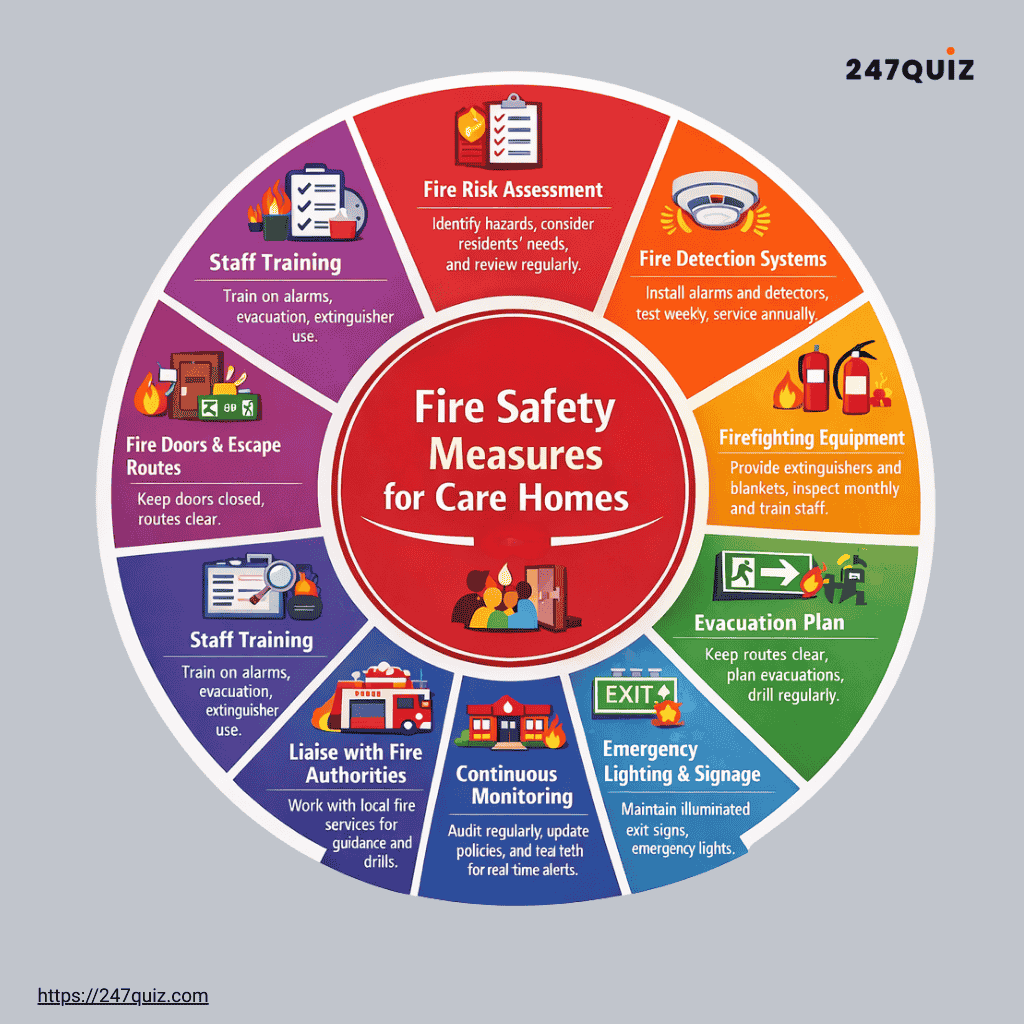
Top 10 Fire Safety Measures for Care Homes
1. Conduct a Comprehensive Fire Risk Assessment
The foundation of fire safety is a thorough risk assessment. This should identify potential fire hazards, such as electrical equipment, cooking areas, and smoking zones.
It must also consider the specific needs of residents, including those who require assistance during evacuation. Risk assessments should be reviewed regularly and updated whenever there are changes in the building layout, occupancy, or equipment.
2. Install and Maintain Fire Detection Systems
Care homes must have a reliable fire alarm system that meets British Standards (BS 5839). Smoke detectors, heat detectors, and manual call points should be strategically placed throughout the premises.
Regular testing and maintenance are essential to ensure these systems function correctly. Weekly alarm tests and annual servicing by qualified professionals are recommended.
3. Ensure Adequate Firefighting Equipment
Fire extinguishers, fire blankets, and hose reels should be available in accessible locations. Staff must be trained to use them safely and understand which type of extinguisher is suitable for different fires (e.g., electrical, grease, or paper fires).
Equipment should be inspected monthly and serviced annually.
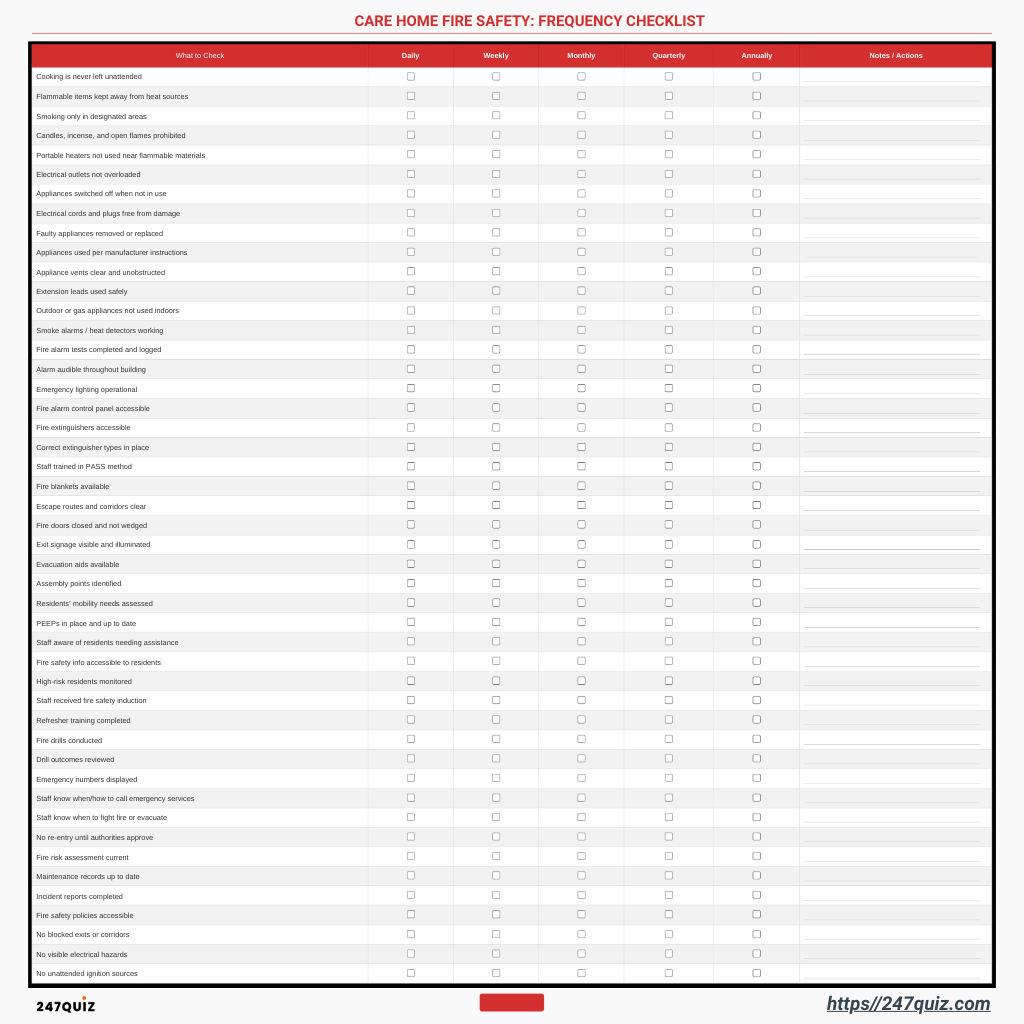
👉Download Our Easy-to-Use Fire Safety Checklist for Care Homes (PDF Version): Care Home Fire Prevention Checklist
4. Develop and Practice an Evacuation Plan
An effective evacuation plan is vital in a care home setting.
The plan should include:
- Clear escape routes that are well-lit and free from obstructions.
- Personal evacuation plans for residents with mobility or cognitive challenges.
- Assembly points at a safe distance from the building. Regular fire drills should be conducted at least twice a year, involving both staff and residents where possible. These drills help identify weaknesses and improve response times.
5. Staff Training and Awareness
All staff members must receive comprehensive fire safety training, including:
- How to raise the alarm.
- Safe evacuation procedures.
- Use of firefighting equipment. Training should be refreshed annually and whenever new staff join. Additionally, staff should be aware of the specific needs of residents during emergencies.
6. Control Fire Hazards
Preventing fires is as important as responding to them. Key measures include:
- Electrical safety: Regular PAT testing of appliances and avoiding overloaded sockets.
- Kitchen safety: Implement strict protocols for cooking areas, including never leaving cooking unattended.
- Smoking policies: Designate safe smoking areas away from flammable materials and provide fireproof ashtrays.
- Storage: Keep flammable substances in secure, ventilated areas away from heat sources.
7. Maintain Fire Doors and Escape Routes
Fire doors play a crucial role in containing fires and smoke. They should be kept closed and never wedged open.
Regular inspections ensure that seals, hinges, and closing mechanisms are in good condition. Escape routes must be clearly marked with illuminated signage and kept free of obstacles at all times.
8. Emergency Lighting and Signage
In the event of a power failure, emergency lighting ensures safe evacuation. All exit signs should be illuminated and comply with UK safety standards. Regular checks are necessary to confirm functionality.
9. Liaise with Local Fire Authorities
Care homes should maintain a strong relationship with local fire services. They can provide guidance, assist with drills, and review safety measures. Involving professionals ensures compliance and enhances preparedness.
10. Continuous Monitoring and Improvement
Fire safety is an ongoing process. Regular audits, feedback from drills, and updates to policies ensure that the care home remains compliant and safe.
Technology such as fire alarm monitoring systems can provide real-time alerts and improve response times.
Conclusion
Fire safety in care homes is not optional. It is a legal and moral obligation. By implementing these measures, care homes can significantly reduce fire risks and ensure the safety of residents and staff.
Regular training, maintenance, and vigilance are key to creating a secure environment where vulnerable individuals can live with peace of mind.